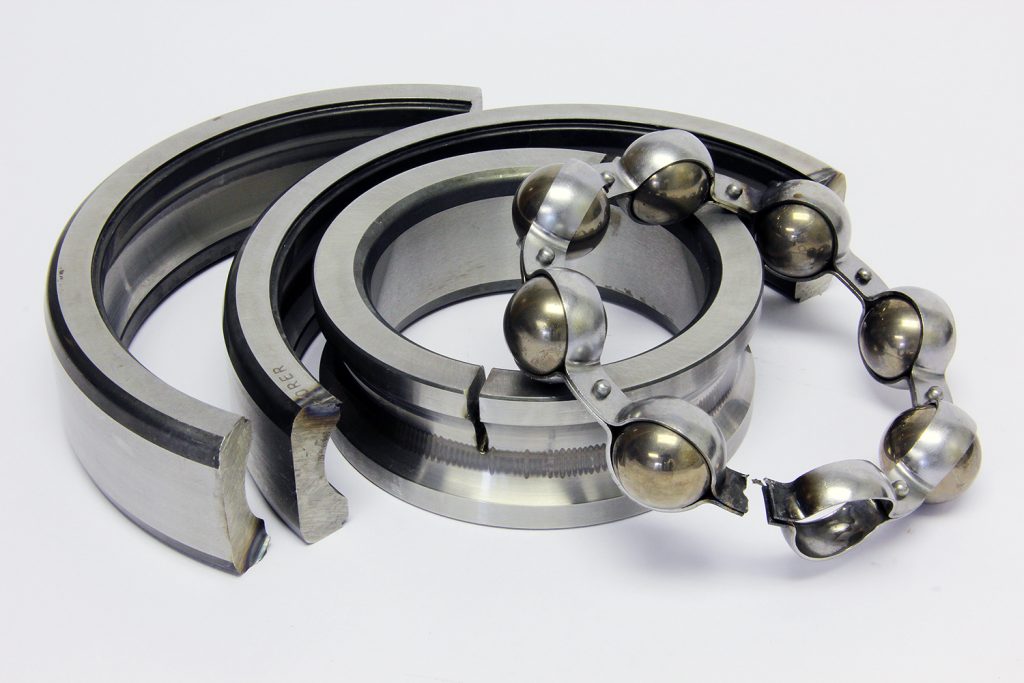

What You Need
When inspecting a bearing for fluting, you may find our bearing inspection report useful.
Whether you use our report or not, you will need to inspect the bearing and bearing cavity, and retain a sample of the lubricant in case further analysis is needed.

What to Look For
When inspecting a bearing, check the races, rolling elements, and grease for
- Contamination
- Signs of excessive heat
- Hardening of grease
- Abnormal coloration (blackened grease)
- Excess grease escaping the bearing
Detailed Procedure
Cut the outer race in half.
- Follow established safety precautions and use personal protective equipment, including eye protection, hearing protection, face shield, gloves, and protective clothing.
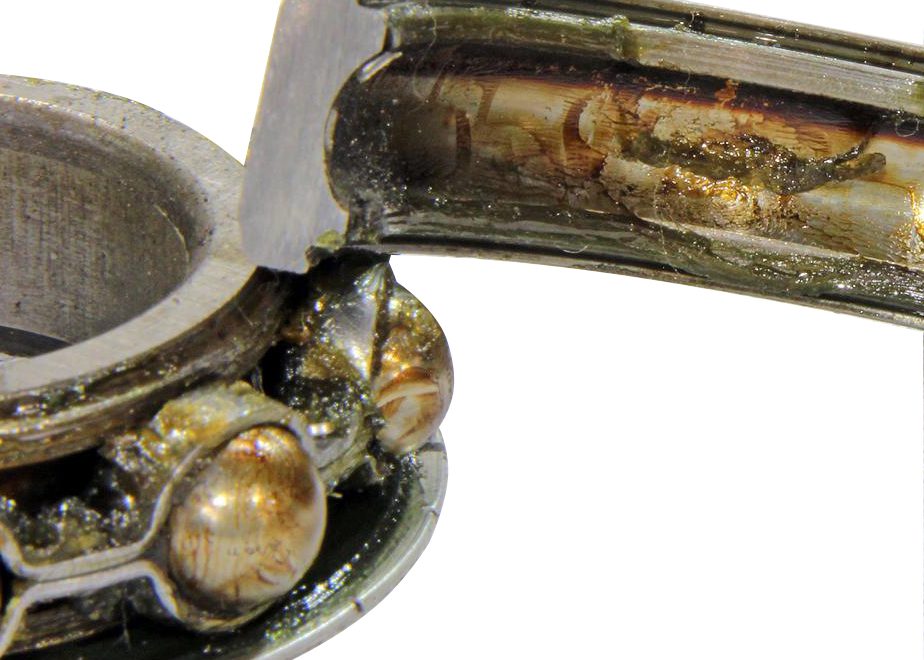
Inspect the grease and contamination in the bearing. You should be looking for:
- Burnt Grease: Continuous electrical arcing in the motor bearings can rapidly deteriorate the lubricating capability of the grease, leading to bearing race damage. When an arc occurs, the oil component of the grease is heated beyond its temperature capacity.
- Contamination: In addition to the burnt grease, arcing causes small metal particles to loosen from the bearing races/balls, which are then distributed throughout the grease. These particles are abrasive and intensify the bearing wear.
You may also want to clean the bearing with degreaser and look for frosting and fluting. A cut and cleaned bearing is shown to the right.