

Auteur/autrice : AEGIS
Electro Static Technology is now ISO 9001:2015 Certified
Electro Static Technology, a division of ITW Inc., announces their ISO 9001:2015 certification following a comprehensive audit performed on-site this summer. Certification recognizes companies that meet and exceed standards of quality and continuous improvement.
“Many of the processes and procedures were already in place. In other areas, the ISO tools used to maintain documentation help us be a better company.”, said Matt Roman, the Engineering Manager and leader of the ISO implementation. “The company as a whole took on this project with vigor and we are proud of this accomplishment. It is our policy to continue improving our processes to meet and exceed our customer’s expectations.”
Electro Static Technology was founded in 1984 and continues to expand its AEGIS® product line. The company designs, develops, and manufactures AEGIS® brand shaft grounding rings and anti-static brush products used to prevent unwanted electrical discharges in motor bearings and to dissipate static charges. Applications include rotating and linear motion machines that are used in industrial and commercial process applications globally.
If a Motor is Worth Repairing, it’s Worth Protecting with an AEGIS Ring
There are a number of factors to consider when deciding whether to repair or replace a damaged motor. These include (but are not limited to) the age and general condition of the motor, the availability of a suitable replacement (including the size and horsepower), and the energy efficiency of the motor versus a newer motor.
But if you decide that a motor is worth repairing, protecting it from electrical bearing damage makes good sense from both an operational and a financial standpoint. Installing an AEGIS® Shaft Grounding Ring — or having your motor repair shop install one — is one of the least expensive « insurance policies » you can buy, especially if the motor is controlled by a variable frequency drive (VFD).
By controlling the speed of motors, VFDs can improve process control and reduce 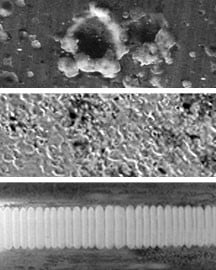 energy usage/costs by 30% or more. But VFDs induce voltages on the shafts of the motors they control — voltages that can damage bearings. And even motors not controlled by VFDs can sustain bearing damage due to stray currents.
Without bearing protection, shaft voltages can discharge through bearings, causing pitting (tiny fusion craters in metal bearing surfaces), frosting (widespread pitting), or fluting (washboard like ridges in the bearing race due to the operational frequency of the drive) and complete bearing failure — sometimes in as little as 3 months!
To protect VFD-driven motors from electrical bearing damage, long-term bearing protection is needed. As proven in millions of installations worldwide, AEGIS Shaft Grounding Rings channel harmful voltage discharges away from bearings and safely to ground, protecting motor bearings for their full L10 life.
AEGIS SGR Rings are available for low-voltage, low power motors, while AEGIS PRO Series Rings are designed for medium-voltage motors, generators, and turbines, as well as large low-voltage AC motors (500 HP or greater) and DC motors (300 HP or greater).
AEGIS Rings are available in solid rings (for installation before motors are put into service) and split rings (for fast, easy installation on coupled or in-service motors). AEGIS uKITs include an AEGIS Ring (solid or split) and a set of mounting brackets that speed and simplify installation on motors with shaft shoulders, slingers, or other end bell protrusions.
Most motor repair shops can install AEGIS Rings in-house or in the field, using best practices to protect new, in-service, or refurbished motors.
For motors up to 100 HP, an AEGIS Ring is typically all you need to protect motor bearings and coupled equipment from electrical bearing damage.
Motors greater than 100 HP and medium-voltage motors, however, are subject to high-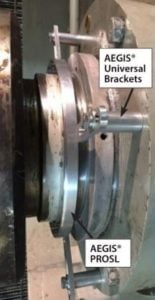 frequency circulating currents as well as capacitive shaft voltage discharge bearing current. So to adequately protect these motors, install an AEGIS Ring on the drive end of the motor and an insulated bearing on the non-drive end. For low-voltage motors less than 500 HP, use an AEGIS SGR. For low-voltage motors greater than 500 HP or medium-voltage motors, use an AEGIS PRO Series Ring.
Regardless of the type of AEGIS Ring you install, be sure to thoroughly clean the motor shaft and apply AEGIS Colloidal Silver to the shaft in the area where the ring’s microfiber brushes will contact it. Or ask your local motor shop to install AEGIS Rings on any motors they repair for you!
To download an AEGIS Bearing Protection Handbook which details best practices for diagnosing failed motors, testing in-service motors for damaging shaft currents, and protecting at-risk motors from electrical bearing damage, click here.
And if you decide that a motor is not worth fixing, choose a new replacement motor with an AEGIS Ring factory installed either internally or externally. For a list of manufacturers that offer motors with AEGIS Shaft Grounding Rings factory-installed, click here.
Shaft Grounding is Key in Sustainable Building
AEGIS Rings have worked for years to improve reliability and sustainable operatuion of HVAC and Pump motors. Case in point: Harvard University’s Campus services Facility Maintenance Operations (FMO) « offers Motor Shaft Grounding, a maintenance program that prevents bearing failure and significantly extends motor life. »
Variable frequency drives (VFDs) present a compelling option for energy savings in sustainable building projects. Power usage in continuously running centrifugal pumps and fans decreases notably with input modulation by a VFD. For example, a 20% reduction in fan speed can reduce energy consumption by nearly 50%. VFDs also introduce their own sustainability problems, however. VFD-induced shaft currents can damage bearings, leading to shorter motor life and costly repairs. Shaft grounding technology such as the AEGIS Shaft Grounding Ring offers a sustainable solution to this problem. Unfortunately, most new construction projects including VFD-driven motors do not utilize this effective option.

The university maintenance department has spearheaded a campus-wide sustainability drive starting with their own Platinum LEED certified headquarters. A major component of this has been a testing program for VFD-driven HVAC motors. Maintenance technicians employ oscilloscopes and voltage measuring probes to ascertain the presence of shaft voltage. When harmful voltage levels are detected, the maintenance department may recommend the installation of an AEGIS ring. Already successfully employed in multiple new buildings on campus, expanding the AEGIS ring to existing motor setups that require bearing protection continues to increase campus-wide sustainability.
The University Test Case
In December 2009, the ring’s manufacturers installed their product on two VFD-controlled HVAC motors in the maintenance headquarters building as a demonstration of the new program. The identical three year old Baldor 7.5HP motors respectively powered a chilled water pump and an air supply fan. With the VFD set at 60HZ, the first motor was running at 1,776rpm. The oscilloscope measured peak-to-peak discharges of 61 volts. Results showed rapid voltage collapses at the trailing edge of the waveform, typical of the electrical discharges that damage bearings. After the reading, technicians cleaned the shaft and installed a split AEGIS ring. Follow-up test results displayed the discharge plot as a straight line, indicating that the AEGIS ring diverted shaft voltage discharges.
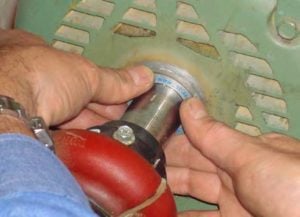 Pump Motor with AEGIS Ring installed with EP2400 Conductive Epoxy
The second motor was tested under identical conditions and measured 50.8 volts peak-to-peak shaft discharge. Due to the limited accessibility of this motor, application of a hand-held heater sped epoxy curing in the AEGIS ring installation. After the complete installation, a new test read only 380 millivolts peak-to-peak, again indicating the AEGIS ring successfully diverted shaft voltage discharges to ground.
Conclusion
VFDs provide a compelling option for energy savings in sustainability-minded design. However, unless a product such as the AEGIS Shaft Grounding Ring mitigates the risk of bearing damage, repair costs could outweigh any savings. While this problem remains best addressed in the design stage of the system, the university case study effectively demonstrates the potential to retrofit previously installed motors with shaft grounding technology. Once installed, an AEGIS ring requires no maintenance and lasts for the life of the motor, providing effective protection against shaft voltage.
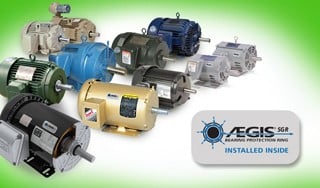 Most motor manufacturers have product lines with AEGIS Rings factory installed.
More information about the university case study can be found here.
Permanent Magnet Motors Need Shaft Grounding Rings
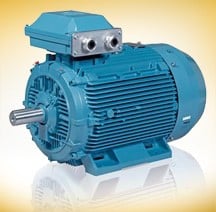 Unlike asynchronous AC induction motors in which the speed of rotation is slower than the speed of the magnetic field, permanent magnet AC (PMAC) motors are synchronous machines that rotate at the same speed as the magnetic field produced by the stator windings. In doing so, they eliminate rotor conductor losses, offering significantly higher efficiencies and power factors, as well as improved performance and speed control. In fact, PMAC motor losses are typically 15-20% less than those of equivalent size NEMA premium induction motors. And they provide higher flux density than comparably-sized induction motors. Simply put, they deliver more power (torque) within a given physical envelope, or equal torque in a smaller package. They also have a wider speed range than AC induction motors.
PMAC motors are also known as Permanent Magnet Synchronous Motors (PMSMs) and Brushless AC Motors. These motors use rare earth permanent magnets, such as neodymium or samarium-cobalt, that have very strong magnetic properties and produce high flux levels in the motor. They are so strong, in fact, they can interfere with pacemakers, hearing aids, and other implanted medical devices, as well as electronic devices (cell phones, tablets, watches, etc.) and even credit cards. But once the rotor has been enclosed within the motor housing, radiated magnetic energy is no greater than that of an induction motor.
Virtually all true permanent magnet motors are operated by variable frequency drives (VFDs). Consequently, they are at risk of electrical bearing damage from VFD-induced shaft voltages, just like AC induction motors. And because they typically cost more than AC induction motors, they are more expensive to replace.
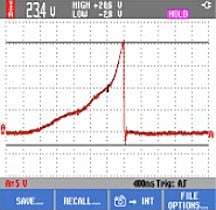
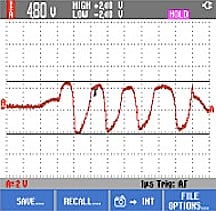
Lab testing of two PMAC motors (a 45 kW motor and a 300 kW motor) operated by pulse width modulated (PWM) VFDs illustrates that permanent magnet motors are not immune to electrical bearing damage caused by VFDs. Both motors were tested at 5000 RPM. The shaft voltage reading from the 45 kW motor with no bearing protection showed peak-to-peak voltage spikes of 21.8V. The waveform illustrates common mode voltage from the PWM drive capacitively coupled to motor shaft. The second reading was taken after installation of an AEGIS® Bearing Protection Ring on the motor. The smaller wave form demonstrates that the AEGIS® Ring dramatically reduced shaft voltages, channeling them away from bearings and safely to ground. In fact, the AEGIS® Ring reduced damaging shaft voltages by more than 70% (from 21.8V to 6.6V peak-to-peak) and eliminated EDM discharges through motor bearings.
When the same testing was repeated on a 300 kW motor, the results were even more impressive. The AEGIS® Ring reduced shaft voltage levels from 23.4V peak-to-peak to 4.8V peak-to-peak, a reduction of 80%. And the AEGIS® Ring also eliminated EDM discharges through motor bearings.
Field testing also demonstrated that shaft voltages and bearing currents were present on a new PMAC motor at levels sufficient to damage motor bearings. Readings taken from the shaft of an unprotected 5 HP PMAC motor operated by a PWM drive (designed for a
PM motor) showed common mode shaft voltage spikes (typical of bearing discharges) of 14.8V peak-to-peak as well as actual dv/dt bearing discharges of 12.1 volts. Once an AEGIS® Bearing Protection Ring was installed on the motor, voltage levels dropped to 3.28 volts peak-to-peak — a 78% reduction!
So, while PMAC motors offer many advantages over AC induction motors (higher flux density, more torque, greater energy efficiency, and wider speed range), they are every bit as prone to EDM bearing damage from VFD-induced shaft voltage discharges as AC induction motors. The good news, however, is that AEGIS® Shaft Grounding Rings are equally effective in preventing VFD-induced EDM bearing damage to these high-performance motors as they are in preventing such damage to AC induction motors.
The Larger the Motor, the Greater the Cost of Bearing Failure
Using variable frequency drives (VFDs or inverters) to control the speed of motors large and small is not only a cost-effective means of improving process/system control, it can also greatly reduce energy costs.
But VFDs have their drawbacks. They induce high frequency voltage on the shafts of the motors they control. Without an alternate path to ground, this VFD-induced voltage can discharge through motor bearings. This discharge through the bearings causes electrical discharge machining (EDM), and blasts pits into the smooth surfaces of the bearing. EDM in the bearing eventually leads to frosting and fluting (washboard-like ridges on the bearing race), and bearing failure — often in as little as 3 months!
While some large motors can be repaired on site, many must be pulled out of service, loaded onto a truck (often requiring a crane), and transported to a motor repair facility. This can be a time-consuming and very expensive process. And the larger the motor, the greater the cost of replacing damaged bearings.
But the cost of repairing motors pales in comparison to the costs of downtime and lost production. Larger motors are typically used in high volume processing applications, where the cost of every minute of lost production can be staggering.
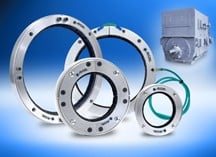
AEGIS® PRO Series Rings protect medium-voltage motors, generators, and turbines, as well as large-frame low-voltage AC motors (500 HP or greater) and DC motors (300 HP or greater). PRO Rings are vailable in solid- and split-ring versions for shaft diameters from 2.5″ (50 mm) to 31.5″ (800 mm). They have 6 rows of conductive microfibers that completely encircle the motor shaft, providing millions of contact points that channel harmful shaft voltages away from bearings and safely to ground.
Solid PRO Rings are best for installation on new motors before they are put into service or on older motors when they are repaired. Split PRO Rings come in mating halves that slide around the shafts of coupled motors for fast, easy field installation.
There’s even an AEGIS PRO Ring for protecting and monitoring 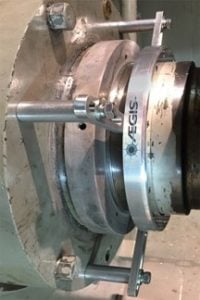 remotely located or hard-to-access motors. The AEGIS PROMR combines an PRO Ring with an monitoring ring (separated by an insulating phenolic spacer). It provides bearing protection and remote monitoring in a single, compact unit. Universal Mounting Brackets — designed to accommodate shaft shoulders, slingers, or other end bell protrusions — simplify and speed the installation of any size PRO Series Ring.
For horizontally mounted motors with single-row radial ball bearings at both ends of the motor, best practices include:
• At the non-drive end: Isolate the bearings using an insulated sleeve or coating; or install insulated ceramic or hybrid bearings to disrupt circulating currents.
• At the drive end: Install one AEGIS PRO Ring either internally (on the back of the bearing cap) or externally (on the motor end bracket).
• Whether the ring is installed internally or externally, be sure to apply AEGIS Colloidal Silver Coating to the motor shaft where the ring’s conductive microfiber will make contact.
• For low- or medium-voltage motors where both bearings are insulated, install one AEGIS Ring, preferably on the drive end to protect the bearings of attached equipment (e.g., gearbox, pump, fan bearings, etc.).
For more information on AEGIS® PRO Series Rings, see the PRO Series product page. You can also peruse our case studies on how PRO Rings solved real-life problems in a number of applications.
Don’t Let Motor Repair Costs Wipe Out Energy Savings
| A key goal of modern HVAC systems is to eliminate energy wasted on overheating or overcooling areas of a building. Matching heating/cooling capacity to load can yield tremendous energy efficiency gains and dramatically reduce building energy costs.
And a key tool in this quest is the variable frequency But while VFDs provide significant energy savings in HVAC applications, they can also damage motors. VFDs create voltage on the shafts of the motors they control. This voltage can discharge to ground by arcing through the motor bearings, causing pitting in the bearings’ ultra-smooth bearing race. This damage accumulates over time, and leads to To protect VFD-driven motors from electrical bearing damage, effective long-term bearing protection is needed. As proven in millions of installations worldwide, AEGIS® Shaft Grounding Rings channel harmful voltage discharges away from bearings and safely to ground, protecting motor bearings for their full L-10 life. AEGIS® protection is available in solid rings for installation before motors are put into service and in split rings for fast, easy field installation on coupled in-service motors. AEGIS® uKITs include an AEGIS® Ring (solid or split) and a set of mounting brackets that speed and simplify installation on motors with shaft shoulders, slingers, or other end bell protrusions. But by far the easiest way to protect motors from VFD-induced bearing damage is to buy them new with AEGIS® Rings factory-installed. So don’t let motor repair and replacement costs eat up the energy cost savings that VFDs provide. Protect your motors from VFD bearing damage with AEGIS® Bearing Protection Rings. To download a copy of our White Paper on protecting HVAC motors from electrical bearing damage, click here. For more information on AEGIS® Rings and uKITs, click here. The AEGIS® website has a section devoted to the manufacturers who offer AEGIS® Rings factory installed in their motors: AEGIS® OEM Pages. To download our Bearing Protection Handbook of best practices for diagnosing and preventing VFD-caused bearing damage, click here. |
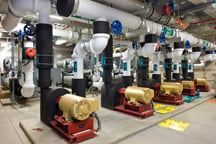 drive, or VFD. By controlling the amount of power to motors, VFDs can precisely match HVAC capacity to discrete areas within a building, eliminating the energy costs associated with conditioning and moving the air, as well as the costs of overconditioning the air. Because the energy required to run fan or pump motors correlates to their flow rate cubed, reducing the speed of these motors by half reduces the horsepower needed to run them by a factor of 8. And restricting the flow from a motor working at full speed through the use of dampers or other throttling mechanisms is simply a waste of energy and money.
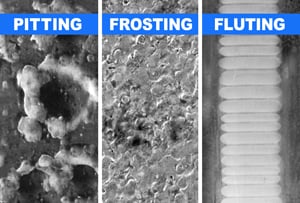 premature bearing failure. In the end the user must repair or replace the motor, possibly cancelling out the energy cost savings from using a VFD. And the user will face the cost of unplanned downtime to boot!
 A large number of motor manufacturers now offer motors with AEGIS® Rings pre-installed externally or inside the motor, either off-the-shelf or through their modification shops.
Whether They’re Old or New, Protect Your VFD-Controlled Motors from Bearing Damage with AEGIS Rings
Most companies are constantly looking for ways to save energy. It’s a quest that never ends. But you don’t have to tackle it all at once. Older motors — even those that were customized for a particular system/application or those no longer in production — can be made more energy-efficient through the use of variable frequency drives (VFDs). VFDs provide a simple, cost-effective way to control a motor’s speed or torque by varying the power output. In doing so, they can not only improve process control; they also save energy.
If the motor output is restricted through dampers or other throttling mechanisms, a VFD can save even more in energy costs by precisely matching capacity to demand and eliminating needless energy waste.
If a new motor is a logical replacement for an older motor, the potential for energy savings is even greater. New NEMA Premium motors offer 5-7% higher efficiency for smaller motors (10 HP or less). So replacing an older standard efficiency motor with a new NEMA Premium efficiency motor controlled by a VFD could yield impressive energy savings.
But controlling a motor with a VFD can also shorten the motor’s life. 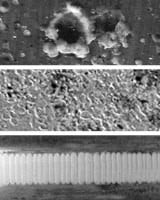 VFDs create damaging voltages on the shafts of the motors they control. Without proven, long-term shaft grounding, these voltages can discharge through motor bearings, causing electrical discharge machining in the form of pitting (tiny fusion craters in metal surfaces), frosting (widespread pitting), fluting (washboard-like ridge in the race wall), and complete bearing failure — in as little as 3 months! Bearing or motor replacement costs and unplanned downtime can easily wipe out any energy savings from using VFDs.
AEGIS® Shaft Grounding Rings combine direct contact and proprietary non-contact technology to provide superior grounding and protect motor bearings for their full L-10 life. AEGIS Rings channel these damaging voltage discharges away from bearings and safely to ground, protecting VFD-driven motors and the energy savings they generate.
You can easily install AEGIS Rings yourself on any motor (even those with shaft shoulders, slingers, or other end bell protrusions), or have your local motor repair shop install them. But the simplest way to prevent VFD-induced bearing damage is to purchase a new motor with AEGIS Rings factory-installed from the manufacturer. In fact, most major motor manufacturers offer motors factory-equipped with AEGIS Rings.
So, if you are working to make your building, systems, or processes more energy-efficient, remember you don’t have to replace all your motors at once. You can replace older, less efficient motors (as they wear out) with new VFD-controlled NEMA Premium motors equipped with AEGIS Shaft Grounding Rings.
For more information on how VFDs can damage motor bearings, click here.
For more information on AEGIS Ring Universal Mounting Kits, click here.
For more information on how AEGIS Rings protect VFD-driven motors, click here.
For a list of manufacturers that offer motors with AEGIS Rings factory-installed, click here.
UL Approval for AEGIS® Grounding Rings for Hazardous Environments
Underwriters Laboratories (UL) has an approved set of procedures for installing AEGIS shaft grounding rings inside explosion proof (XP) motors. XP motors with AEGIS rings installed according to these procedures may be used in hazardous environments, Class I: Division 1.
The following diagrams are the approved installation locations inside the XP motor.
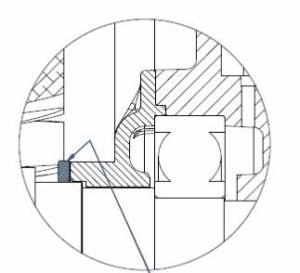 Detail of AEGIS Shaft Grounding Ring in XP motors
Note: In Class I: Division 2 designs. Because shaft grounding devices must be installed inside explosion proof enclosures (as per IEEE 303) for Class I: Division 2, they may not be installed internally or externally in/on a non-XP motor.
At this time, Marathon Electric is the only electric motor manufacturer marketing XP motors with AEGIS shaft grounding protection installed inside. They range from 3 HP (182T Frame) to 50 HP (326T Frame) and Marathon Electric will install AEGIS Rings in larger models. For more information on Marathon Hazardous Duty motors with AEGIS Inside. For catalog numbers and pricing, see the highlighted “-P” motors on the Hazardous Duty™ pages of the 2014 catalog.
UL Approved Electric Motor Repair Companies
To install AEGIS rings in explosion proof motors in a hazardous environment, a motor repair shop must first be UL approved to work on all XP motors. They must then apply for certification for the addition of adding shaft grounding to their UL binder and then demonstrate adherence to the additional set of procedures required for installing shaft grounding inside of XP motors.
Motor repair shops with UL certification to work on XP motors and certification of their ability to add shaft grounding can « rework » any size explosion proof motor and then re-nameplate the motor as explosion proof. The drawing below was created by UL to show where the ring must be installed to comply.
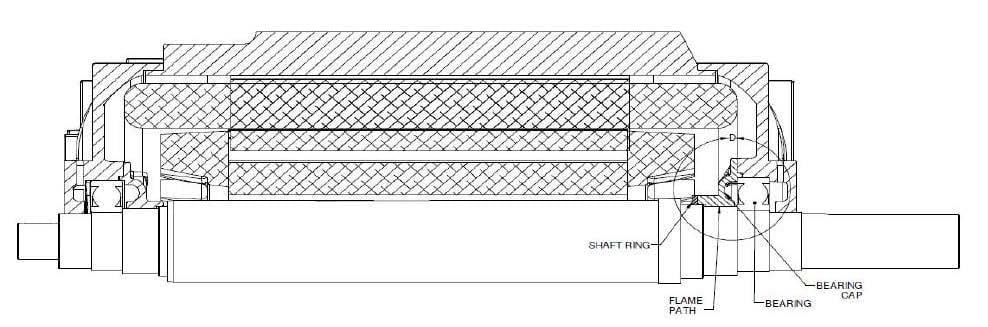 Diagram of location to install AEGIS Rings inside the XP motors
It Just Got Easier to Specify Shaft Grounding for VFD-fed Motors
AEGIS® Shaft Grounding Rings are frequently specified as protection against bearing current damage in motors fed by inverter drives. And now it’s even easier to call for shaft grounding with this master spec for CSI Division 23 05 13, Common Motor Requirements for HVAC Motors, with AEGIS best practices added.
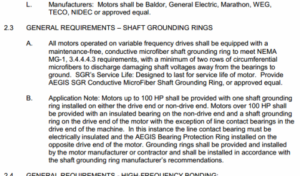 An excerpt of Div 23 05 13 with added provisions for shaft grounding rings on VFD-fed motors.
Variable frequency drives are widely specified in HVAC applications for energy savings. But VFDs produce capacitively coupled shaft voltages on the motors they control. This shaft voltage can discharge through the motor bearings, leading to premature failure. Grounding the motor shaft with an AEGIS ring bleeds off shaft voltage before it builds up enough to discharge through bearings.
For more engineering resources, including the list of major manufacturers’ motors with AEGIS rings factory-installed, please see our specifications page.
AEGIS® Ring Installation with Conductive Epoxy
This video shows everything you need to install AEGIS Shaft Grounding Rings with conductive epoxy.