

Auteur/autrice : AEGIS
The “Greening” of America’s Buildings and the Need for Shaft Grounding on VFD-Driven Motors
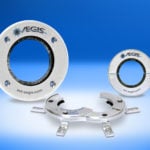 The “Greening” of America’s Buildings: The growing “green” movement has led to a flood of new standards including the US Greens Building Councils Building Performance Initiative, the Green Building Initiative, and LEED — all aimed at increasing energy efficiency and sustainability. Challenged to reduce energy consumption and to document savings, America’s facilities managers are installing variable frequency drives (VFDs) in HVAC systems as one of the best ways of achieving such savings.
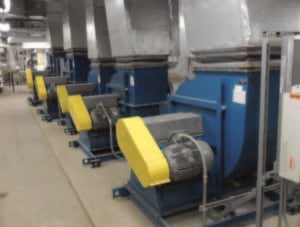
The Promise of VFDs: VFDs reduce energy consumption by allowing motors to run less than full speed. When used to control air conditioning, air handling,
or pump motors, VFDs can yield energy savings of 20 ~ 30% or more by allowing motors to run at reduced speeds to compensate for changes in load.
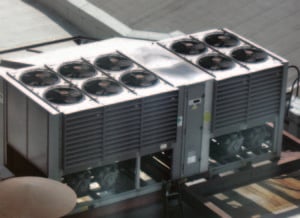 The Need for Shaft Grounding on VFD-Driven Motors: But, VFDs can damage the motors they control. They induce currents on motor shafts that discharge through the bearings, causing pitting, fluting, and catastrophic motor failure. Without bearing protection, any savings from the use of VFDs can be
quickly wiped out by the cost of replacing motors and by system downtime. To make HVAC systems sustainable as well as energy efficient, a reliable method of bearing protection is required.
Proven, Long-Term Bearing Protection: By diverting bearing currents safely to ground, AEGIS® SGR Shaft Grounding Rings ensure the reliable, long-term operation of VFD driven motor systems, locking in energy savings and making these systems truly sustainable and truly green.

Select Motors with Factory Installed AEGIS from Baldor, WEG, Regal, TECO, Leeson and more
What is the coating on the shaft when a Carbon Block Brush is used?
A highly resistive glaze may form on brush surface, requiring periodic cleaning. This is sometimes also called a patina and forms a visible black non-conductive band on the shaft. It is also one of the disadvantages of using a carbon block brush for shaft grounding. It renders the carbon block brush ineffective.
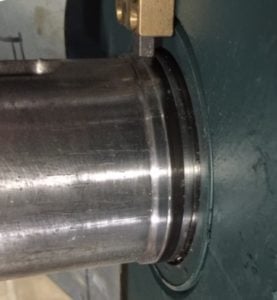
Carbon brush causes nonconductive coating on motor shaft (patina)
What to do? Clean the shaft where the carbon block brush contacts the shaft and install the AEGIS Shaft Grounding Ring in its place.
AEGIS® Rings Ensure Process Uptime by Protecting VFD-Driven Motors from Bearing Damage
Today, VFDs are used to provide precise control of a wide range of processes and process variables in manufacturing applications.
By allowing motors to run at less than full speed, VFDs can save energy — often 30% or more. But they also offer other benefits. They can improve equipment and machinery uptime, reduce switchgear and cabling costs, and enable more precise process control. As a result, they can improve productivity, quality, and profitability. But VFDs can cause unplanned motor bearing failures — often in as little as three months.
VFDs Improve Process Control…
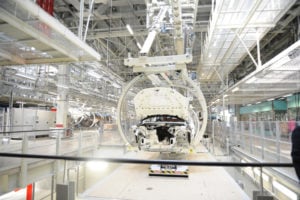 When used to control conveyors — belts or overhead lines — VFDs allow line balancing for optimized production and minimal idle time. With their rapid acceleration and deceleration capability, VFDs can also minimize transfer times between production cells. And by providing non-emergency stop and start control, VFDs can also be used to gently slow the speed of inclined conveyors.
For processes that could run at full uncontrolled speed (such as extrusion), VFDs offer greater control by eliminating variations in line voltage or frequency that could cause unwanted variations in the product itself.
VFDs also improve the efficiency of machines that control process variables in industrial production processes such as the speed of heating blowers and cooling fans, air compressors, assembly lines, quench lines, filling equipment, wire drawing equipment, etc.
Rather than throttling or braking fixed-speed motors, VFDs control motor speed by controlling the amount of power to the motor itself. And by varying the amount of power to the motor according to precise time curves, VFDs can provide soft starting and stopping — smooth ramp ups and slow downs of machines to reduce wear-and-tear and extend machine life.
And by limiting the amount of inrush current to motors, VFDs can also extend motor life.
And yet, the most impressive benefit from the use of VFDs may well be the energy savings they produce. According to a U.S. Department of Energy study, approximately 25% of industrial motor system energy usage was for pumps, and another 14% was for fans. Rather than diverting, redirecting, or throttling the output of motors that power these devices, VFDs provide a way of precisely matching motor output to load. And the benefits of VFDs extend beyond manufacturing systems to plant/facility systems such as HVAC and air handling systems.
But VFDs Damage Motor Bearings
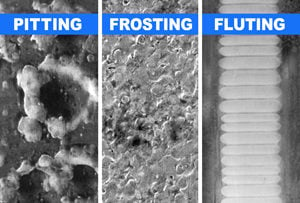
But despite all the control and energy saving benefits they offer, VFDs can damage the motors they control. VFDs produce voltages on the shafts of the motors they control — voltages that can discharge through motor bearings, causing electrical discharge machining (EDM) pitting, frosting, and fluting failure.
AEGIS® Rings Protect Motor Bearings from VFD Damage
To protect process and facility system motors and prevent crippling, costly downtime, VFD-driven motors need proven long-term bearing protection from damaging VFD-induced shaft voltages.
Proven in millions of installations worldwide, AEGIS® Shaft Grounding Rings channel damaging shaft currents away from bearings and safely to ground.
AEGIS® SGR Rings are available in solid- or split-ring versions, and also as uKITs with mounting brackets that simplify installation on motors with shaft shoulders or end bell protrusions.
For medium-voltage motors and large low-voltage motors with shafts to 30” in diameter, AEGIS® PRO Series Rings also come in solid- and split-ring versions, and may also be mounted on universal mounting brackets.
AEGIS® solid rings are designed for installation on new motors before they are put into service, and split rings are ideal for field installation on in-service motors because they eliminate the need to decouple motors from attached equipment.
In addition, a large and growing number of motor manufacturers now offer motors with AEGIS® Rings factory installed.
For more information on the types of bearing damage VFDs can cause, click here.
For an application story on how AEGIS® Rings solved the ongoing problem of bearing damage to a 1000 HP transfer motor at a pulp and paper plant, click here.
For a list of manufacturers that offer motors with AEGIS® Rings factory-installed, click here.
Handling Bearings With Care – Electrical Arcing
Excellent article on the many things that must be looked out for when handling or installing bearings in electric motors. Published in the M+R (maintenance + Reliability) section of Maintenance Technology Magazine, the article lists nine different conditions or practices and gives great advice on each. Of course, each section is a topic in and of itself, and the one I would like to discuss in some more depth is:
Electric Current Arcing
Shaft Voltage Discharge
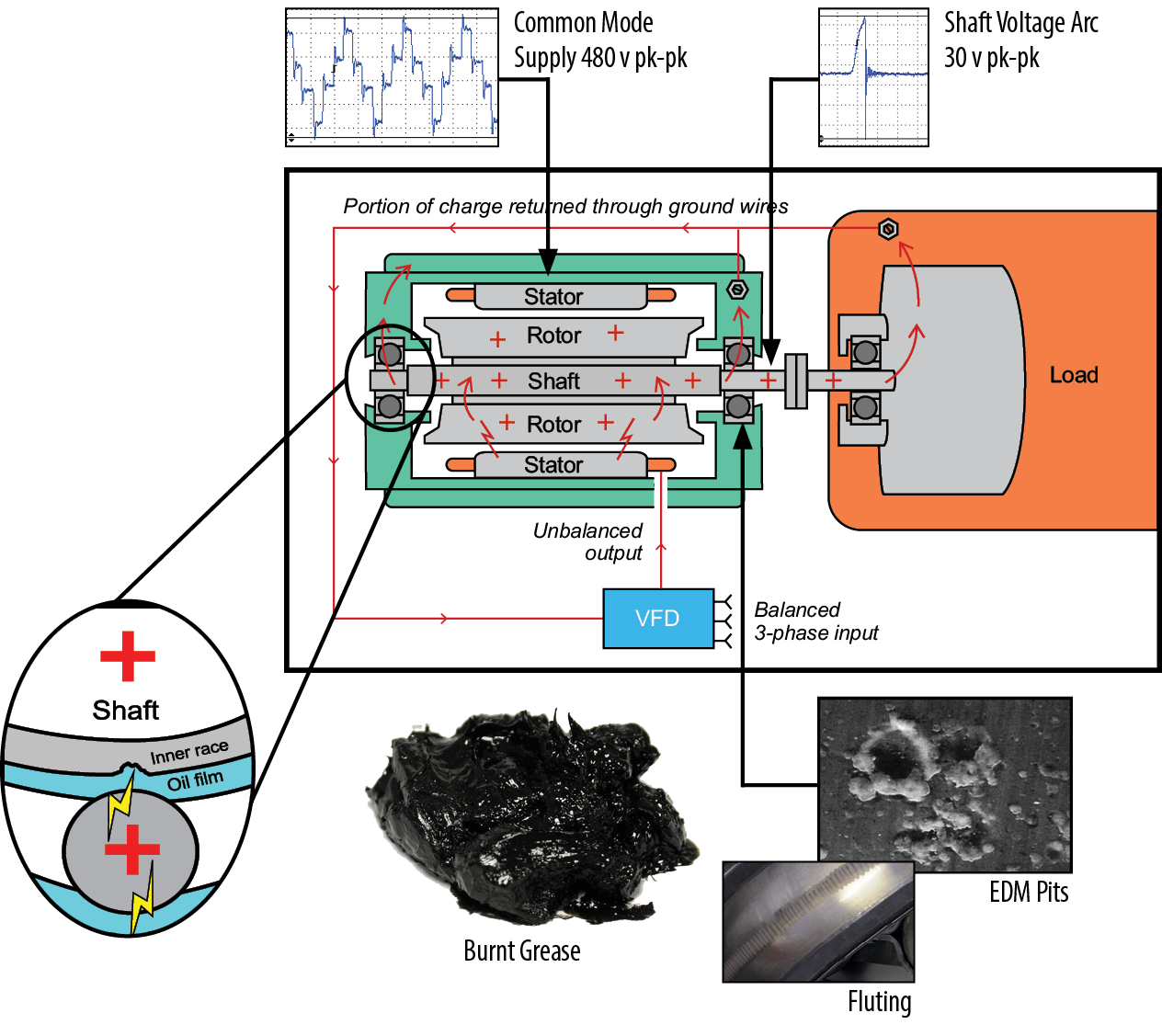
Most pitting in a motor’s bearings comes from one of 2 sources: (1) Capacitive coupled voltage from the stator to rotor through parasitic capacitance on all motors operated by a variable frequency drive (VFD)from small 1 HP to the largest medium voltage motors and (2) high frequency circulating currents which can occur on motors over 100 HP. Separate mitigation is necessary to protect the bearings from these two sources of bearing currents.
The phenomenon for the creation of electrical discharges is similar for both. Essentially, the voltage on the motor’s shaft creates a potential high enough to overcome the dielectric of the oil film in the motor’s bearings. When this happens an electrical arc shoots through from the inner race via the rolling element to the outer race, which is connected to the ground.
The energy in this arc is great enough to melt the hardened bearing steel and create an electrical discharge machining (EDM) pit in the bearing race. The steel surface melts, and the metal hardens on the rim of the EDM pit. Then, the rolling element can either deform the bearing race surface, break the metal particle, or contaminate the bearing. Last but not least, the lubrication burns and deteriorates.
This process can occur MILLIONS of times per hour, and after just a short while, the bearing surface is pitted, and a phenomenon known as « fluting » starts. This is a washboard-type pattern along the bearing race creating vibration, heat, and eventual bearing failure.
How do we stop this from happening?
Motors up to 100 HP
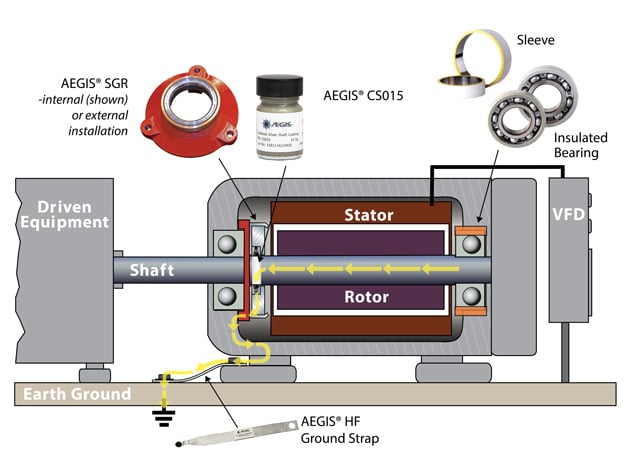
Motors over 100 HP
First: Download the AEGIS Bearing Protection Handbook!
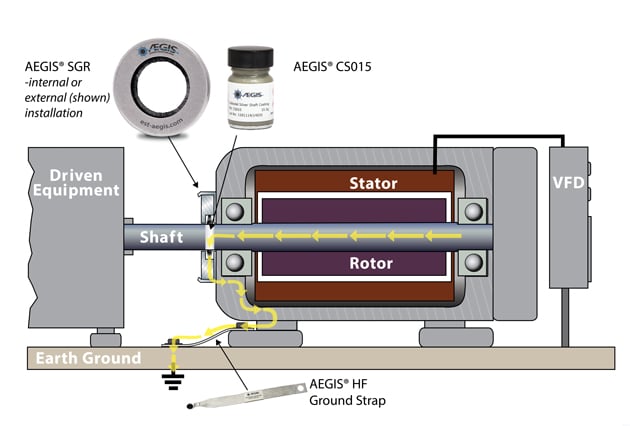
Low-Voltage Motors up to 100 HP: Install AEGIS® Shaft Grounding Rings for these motors, usually on the drive side, either internally or externally.
Motors over 100 HP: Install one AEGIS® Shaft Grounding Ring on the drive end AND insulated bearing on the non-drive end opposite the shaft grounding ring, which prevents circulating currents that may be present in addition to capacitive induced shaft voltage.
Without Bearing Protection, Motors Can Fail
VFD-induced shaft voltage damages motor bearings and shortens motor life
If you’re using variable frequency drives (VFDs) or inverters to control motors, the motors are at risk of electrical bearing damage that can dramatically shorten their lives.

VFDs induce harmful voltage on motor shafts — voltage as high as 40 volts peak — that can destroy bearings in as little as 3 months!
This shaft voltage builds up until it discharges by arcing through the bearings, thousands of times per second. Discharge through the bearings burns and contaminates the lubricant, drastically reducing its effectiveness. Each discharge also blasts a tiny pit into the bearing surface. Over time, this pitting results in fluting, bearing failure, and costly unplanned downtime. While most motor manufacturers offer “inverter-duty” or “inverter-ready” models, these motors usually have only inverter-rated insulation to protect their windings, but nothing to protect their most vulnerable components — their bearings.
AEGIS® Shaft Grounding Rings avert electrical bearing damage by providing a low-resistance path from the shaft to the motor frame. They dissipate shaft voltage before it can build up to levels high enough to arc through the bearings. By mitigating electrical bearing damage, AEGIS Rings protect motor users from the expense and hassle of unplanned downtime.
AEGIS Rings also come with a 2-year extended warranty against bearing fluting damage. No other form of protection against VFD-caused bearing damage offers a warranty like this.
To learn more about AEGIS shaft grounding and best practices for electrical bearing protection, sign up for a training. We offer monthly live training webinars, and – pandemic restrictions permitting – we can also visit your facility to review your exact application.
Rugged and Reliable Vertical Motors for Inverter-Duty Applications
Vertical motors run on variable frequency drives are susceptible to electrical bearing damage and premature failure. When any motor, vertical or horizontal, is run on an inverter, the drive’s output causes a capacitive voltage on the motor shaft that can discharge through the bearings, causing electrical damage and premature failure. This has brought grief to more than one water treatment plant; you can read one of their stories here.
GE Power Conversion is aware of this problem, so they offer their Ultra™ Vertical Pump Motors with an AEGIS® Shaft Grounding Ring as an option. AEGIS® shaft grounding gives VFD-produced shaft voltages a low-impedance path to ground, drawing damaging current away from the bearings, and so protecting them against electrical damage.
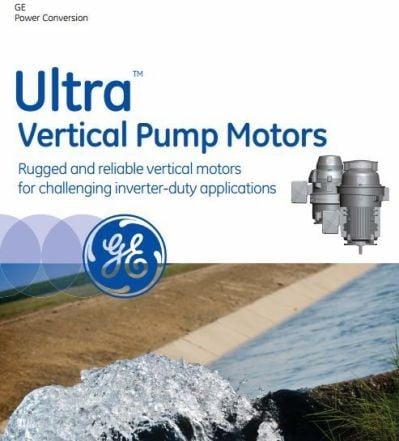
For more on GE Ultra™ Vertical Pump Motors, see this brochure. To learn how AEGIS® shaft grounding helped with a Kansas treatment facility’s chronic bearing failure problem, read this case study. And for fuller background on electrical bearing damage due to VFDs, see the AEGIS® Bearing Protection Handbook.
Is Shaft Voltage Destroying Your Bearings?
Variable frequency drives (VFDs) enable precise speed control and significant energy savings, but they can also cause motor-bearing failure. VFDs take smooth electric power and break it up into pulses. These pulses create a voltage imbalance in the motor that can build up on the shaft. This shaft voltage can discharge through the bearings, causing cumulative damage and premature motor failure.
These destructive discharges can be seen with a digital oscilloscope equipped with a conductive microfiber probe tip, like the AEGIS® SVP-TIP-9100. A typical bearing discharge is shown on the left below, where voltage gradually builds up to several volts (~20V here) and then suddenly collapses back to baseline.
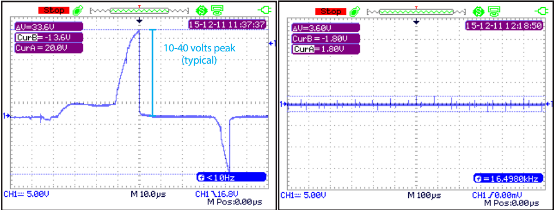
Shaft voltages on a motor before (left) and after (right) installation of an AEGIS® Shaft Grounding Ring. The voltage scale is the same in both images.
One effective way to avoid shaft voltage damage is to equip motors with an AEGIS® Shaft Grounding Ring. These rings’ conductive microfibers contact the shaft and safely « bleed off » shaft voltage before it can build up high enough to discharge through the bearings. A shaft voltage reading from the same motor, but with an AEGIS® Ring installed, is shown above on the right. The AEGIS® Ring reduced peak shaft voltage by about 90%.
AEGIS® Rings can easily be installed on in-service motors. And for new motors, several major motor manufacturers produce lines of inverter-duty motors with AEGIS® factory-installed either inside or outside the frame. Also, AEGIS® Rings are long-lived and rarely wear out or need replacement.
For more information on the problem of shaft voltage on VFD motors and best practices for bearing protection in a variety of situations, see the AEGIS® Bearing Protection Handbook. Or feel free to contact us with any further questions.
New Flowserve Bearing Gard™ with AEGIS® Protects Against Contamination and Electrical Bearing Damage
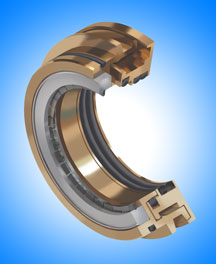 Specially designed for VFD-driven motors in harsh washdown and processing environments, Flowserve’s new Bearing Gard™ bearing isolator protects against both contaminant ingress and VFD-induced electrical bearing damage. The isolator’s unique design offers both static and dynamic protection against contamination ingress. A unique double drive ring design, an innovative static labyrinth shut-off, and an oversized contamination channel provide superior protection against harmful contaminants. And Bearing Gard’s built-in AEGIS® Bearing Protection Ring channels VFD-induced shaft voltages away from motor bearings and safely to ground.
Bearing Gard™ Bearing Isolators are available from stock in standard and slimline versions for motors with shaft diameters of 0.875 – 6.000 inches (23 – 152mm). Custom sizes are also available.
For more information on Bearing Gard™ Isolators with AEGIS® Bearing Protection, click here.
Public Works Manual: Save Pump Motors from VFD-induced Damage
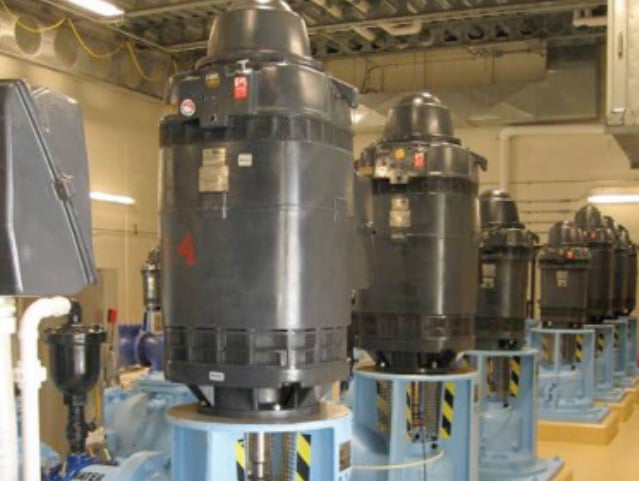 The 2013 Public Works Manual featured a case study on a reverse osmosis plant whose vertical pumps suffered repeated bearing failures. The failures were due to the variable frequency drives (VFDs) used to power the pumps. VFDs can cause electrical current to flow through motor bearings, eventually causing fluting damage and bearing failure.
It took the plant two years, but they finally found the solution to their chronic fluting problem: carrier insulation and AEGIS® Shaft Grounding Rings. After that, the pumps ran for years without failure.
« If you install the rings beforehand, you avoid these problems altogether…
The cost is insignificant when you look at the total cost of a large project. »
To learn more, read the full article.
Shaft Grounding for Inverter-Driven Severe-Duty Motors
 The use of variable-frequency drives (VFDs) to control AC motors has increased dramatically in recent years. In addition to their low operating cost and high performance, they save energy. Today, the challenge facing system designers and engineers is to minimize damage to AC motors from shaft current. From its first minute of operation, a VFD induces destructive voltages that build up on the motor shaft until they find discharge paths to the frame (ground). In most cases, the motor bearings present the path of least resistance. Once voltage is sufficient to overcome the resistance of the oil film layer in the bearing, shaft current discharges, causing electrical discharge machining (EDM) pits and fusion craters in the race wall and ball bearings. This phenomenon continues until the bearings become so severely pitted that fluting, excessive noise, and failure occur.
Mitigation of this damage is possible through various strategies. Some are narrow in application, and
most are costly. Many are not technically feasible. However, a new technology employs a circumferential ring of conductive microfibers to discharge harmful currents and provide a low-cost solution to the problem.