

Author: AEGIS
Swimming Pool Pumps and AEGIS Shaft Grounding
Around this time every year, people around the Northern Hemisphere remember what a wonderful invention the swimming pool is. Although they are expensive to maintain, modern advances in motor and pump control have decreased costs by cutting energy use. However, this increase in efficiency comes with an increased risk of motor bearing failure.
Pumping More for Less with Variable Frequency Drives
For unheated swimming pools, commercial, municipal, or residential, the electricity used to circulate and filter the water is the single greatest cost of ownership. The pumps and motors driving this filtration must be oversized. This allows them to continue moving water at acceptable speeds even when the filter becomes partially clogged. Because of the pump affinity laws, it also means that they use more energy than needed when the filter is less clogged. For example, if the flow rate is doubled, the power consumed increases by a factor of eight.
Variable frequency drives (VFDs) address this problem by controlling the speed the pump system runs at. Larger pumps can be run at the lowest speed necessary. VFDs are usually used for larger pools, using three-phase current. But the residential pool market is also seeing more use of VFDs with special transformers to convert household one-phase current to three-phase.
Whatever the size of the pool or pumping system, there is a tradeoff: VFDs can also cause electrical bearing damage to the motors and pumps that they control.
Electrical Bearing Damage from VFDs
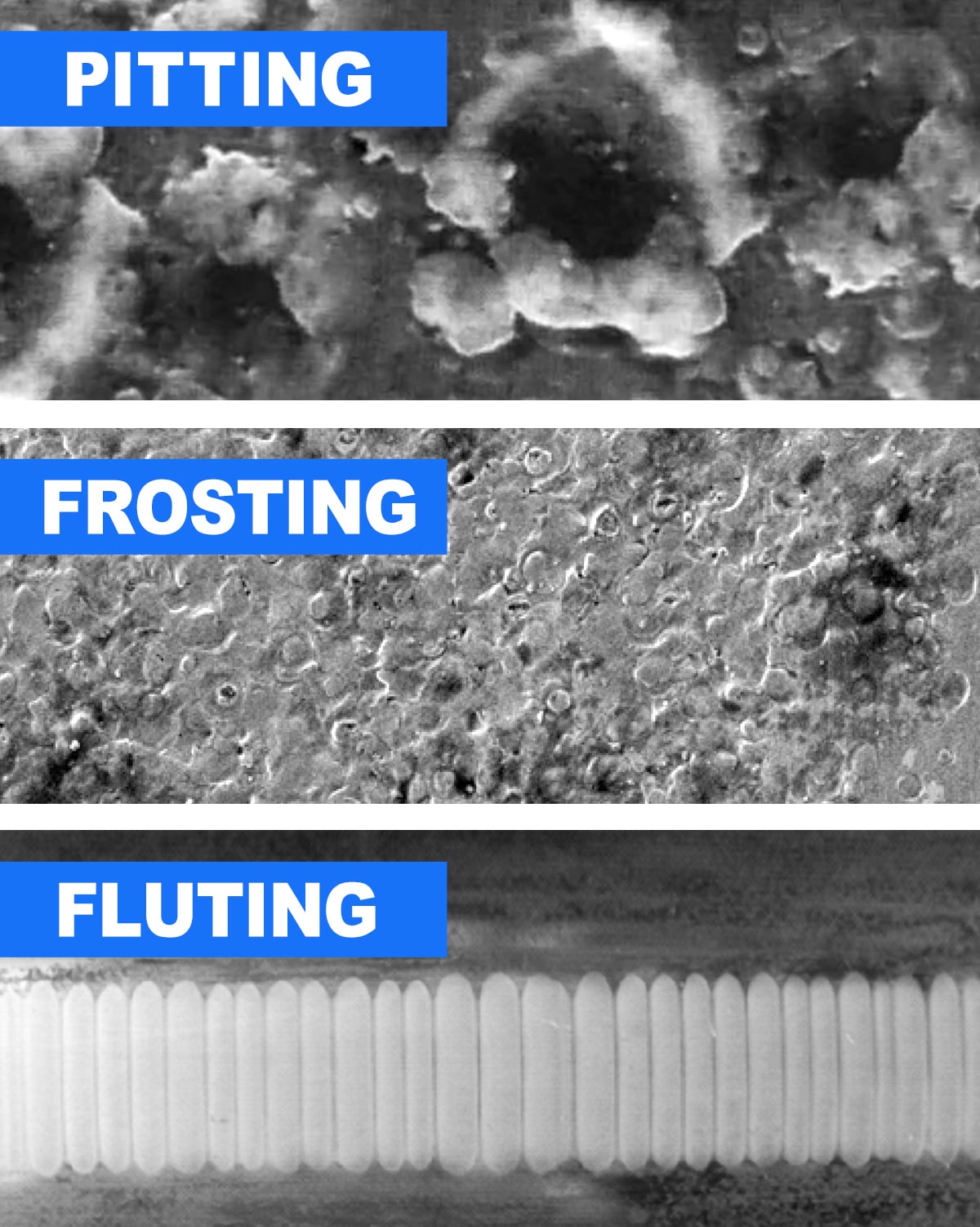
VFDs control motor speed with a technique called pulse width modulation (PWM). The problem with PWM is that its output is not balanced. VFDs’ unbalanced output creates a voltage on the shaft of the motor that it controls, and that voltage tends to discharge by arcing through the motor bearings. This arcing damages the bearings by roughening them, leading to increased vibration, noise, friction, and heat, and often premature failure.
Simply insulating the motor bearings is not a solution, because the voltage will still be present on the shaft and will tend to discharge through the pump bearings and damage them instead.
If the shaft voltage from VFD use is not mitigated, premature bearing failure can wipe out the savings from reduced energy use.
A Solution to Shaft Voltage Discharge Damage
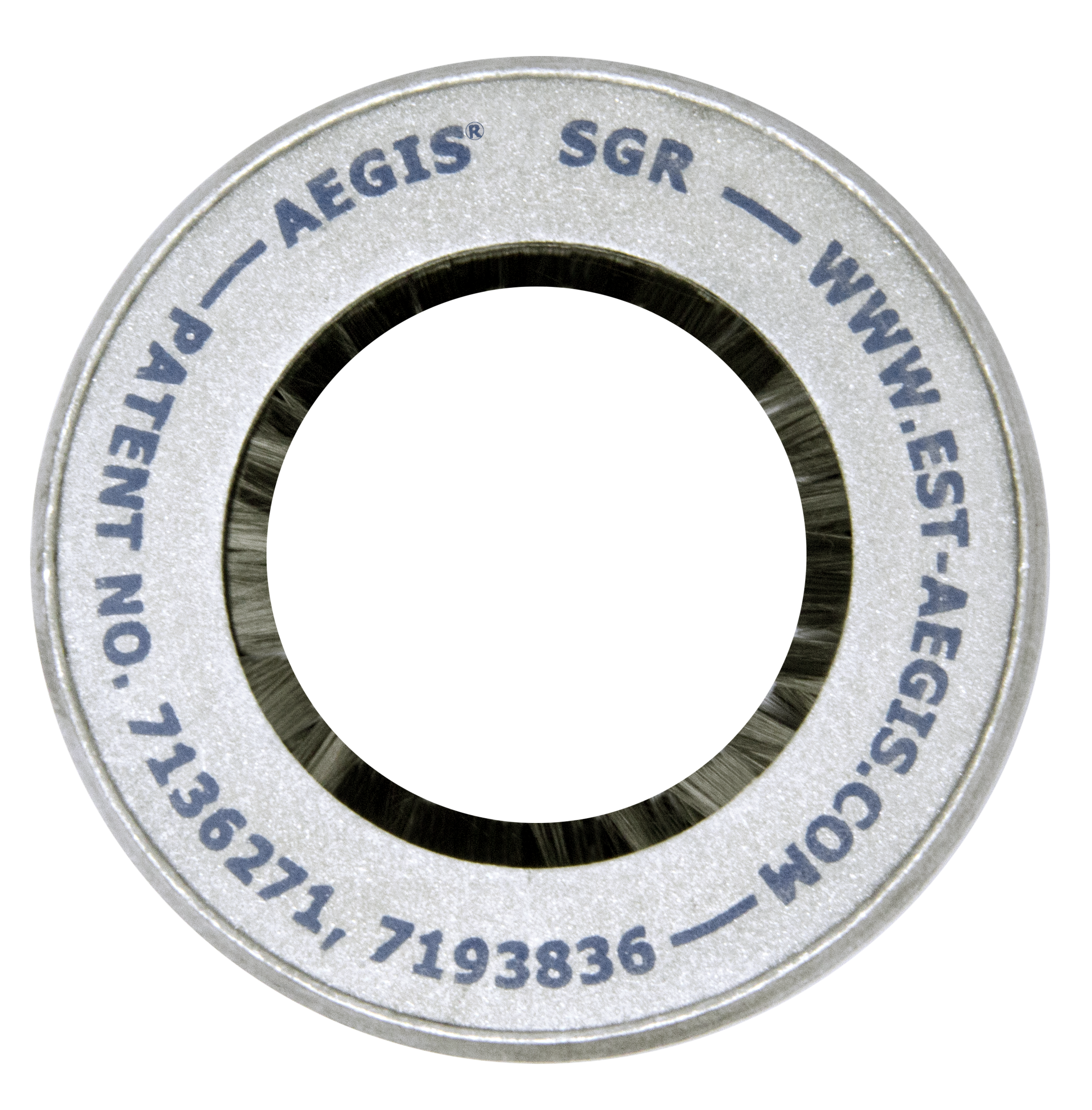
AEGIS® Shaft Grounding Rings mitigate the risk of premature bearing failure in pool pump systems by giving shaft voltage a safe, nondestructive path to ground. In a motor with an AEGIS ring installed, shaft voltage does not build up until it arcs through a bearing; instead, it is dissipated through the ring to the motor frame.
AEGIS rings thus allow VFDs to sustainably deliver energy savings, without causing damage or premature failure to the pumping system and incurring repair or replacement costs.
A Case (Study) in Point
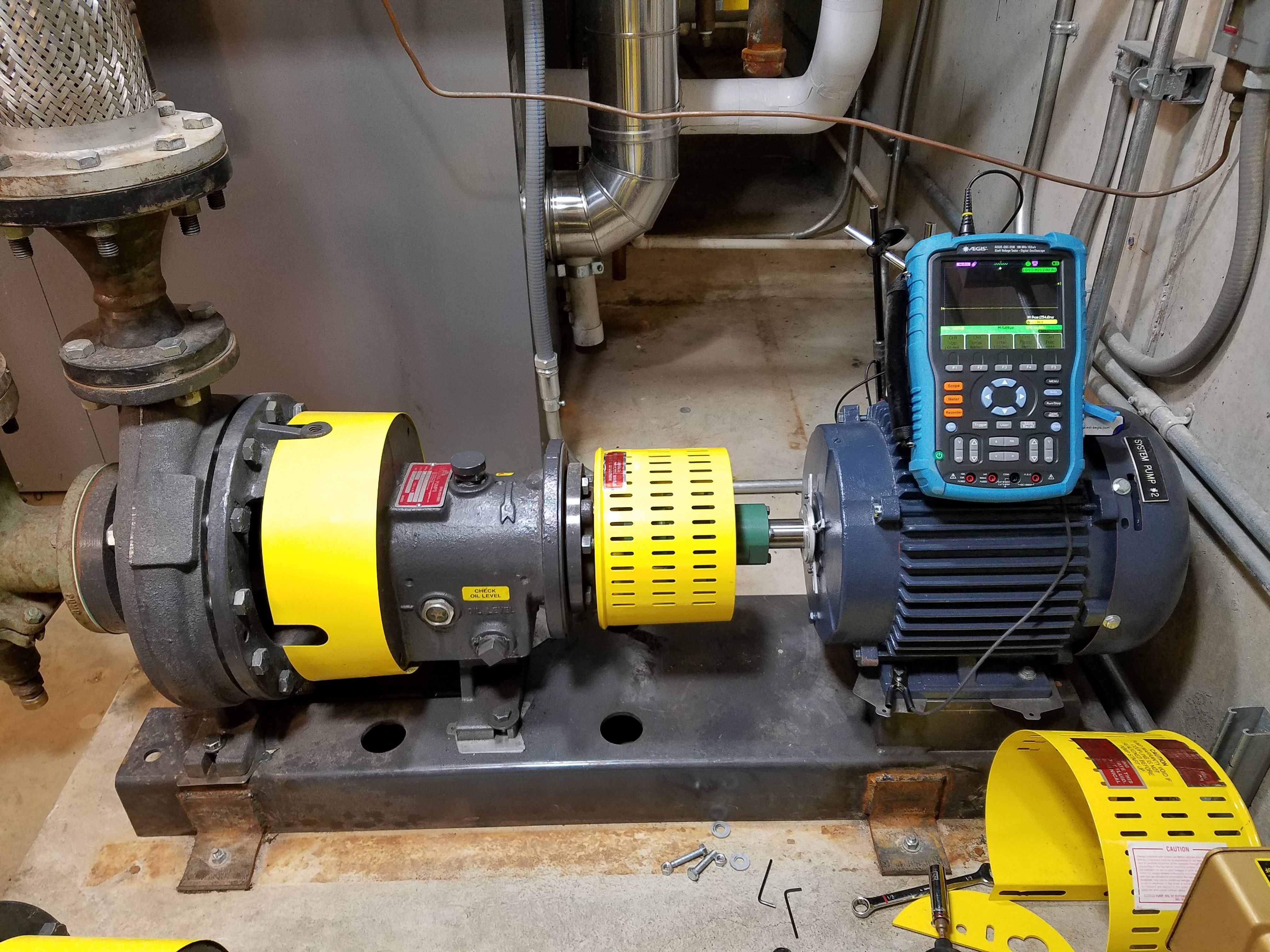
Ten years ago, a large midwestern US recreational center had several of their pump motor bearings fail prematurely. They knew something had to be done, so they came to us and got a second opinion from the vendors of a competing technology. Not to spoil the surprise, but AEGIS rings reduced the motors’ shaft voltage to safe levels, and the other product did not.
To learn more, see our Pumping Systems application sheet.
Summary
Swimming pools have always been expensive to operate, but variable frequency drives significantly cut the amount of electricity it takes. VFDs can, however, cause electrical bearing damage that can cause premature bearing failure and requires expensive repair or replacement (not to mention leaving would-be swimmers out in the heat until the pumping system is fixed).
AEGIS Shaft Grounding Rings dissipate the motor shaft voltage that VFDs create, protecting the bearings from discharge damage, protecting pool owners from repair costs, and keeping pool users cool and happy.
To learn more about AEGIS shaft grounding and best practices for electrical bearing protection, sign up for a training. We offer monthly live training webinars, and we can also visit your facility to review your exact application.
Simple Steps to Avoid Motor Bearing Damage and Unplanned Downtime
Why Motor Reliability Is Your Best Defense Against Unplanned Downtime
When critical motors fail unexpectedly, so do the systems they drive. Production lines stop, fans stop blowing, and pumps stop pumping. Improving motor reliability is really about improving system reliability and keeping essential processes running.
To improve motor reliability and prevent unplanned downtime:
- Address mechanical fundamentals – proper lubrication, alignment, and vibration control
- Monitor operating conditions – temperature, humidity, and contamination levels
- Protect against electrical damage – especially shaft voltage from VFDs
- Implement proactive maintenance – condition monitoring and regular testing
- Use proper bearing protection – shaft grounding rings for VFD-driven motors
 The statistics tell a clear story. Research shows that 51% of motor failures are bearing-related, with another 16% stemming from stator winding issues and 16% from external conditions. The risk is compounded by heat: The hotter bearings run, the faster their lubricant degrades.
Modern industrial facilities face a unique challenge. Variable Frequency Drives (VFDs) have become essential for energy efficiency and process control – About half of all electricity is used to power pumps, fans, and compressors, which can all save energy when run on drives. But VFDs introduce a significant reliability tradeoff. Their high-speed switching creates shaft voltage that can discharge through motor bearings, causing electrical discharge machining (EDM) that leads to premature failure.
The good news? Most motor failures are preventable. A well-designed predictive maintenance program can reduce unexpected stoppages by roughly 45%.
This blog post breaks down the specific failure modes that threaten motor reliability, explains how VFDs create new risks to motors and systems, and provides practical steps to protect your critical systems from unplanned downtime.
How to Improve Reliability by Mitigating Common Failure Modes
This section addresses the most common threats to electric motors, separating them into mechanical/environmental and electrical categories. By understanding these failure modes, maintenance teams can implement targeted strategies to prevent premature failure and avoid costly downtime.
Foundational Maintenance for Mechanical and Environmental Threats
Proper mechanical care and environmental control are the first lines of defense in any motor reliability program. Neglecting these fundamentals can lead to rapid degradation. Our goal is to keep pumps, fans, and conveyors operating efficiently and reliably, and that starts with meticulous maintenance.
- Lubrication: A proper lubrication program is critical, as both over- and under-lubrication significantly increase the probability of premature bearing failure. Following manufacturer recommendations for grease type, quantity, and frequency is essential.
- Alignment: Misalignment places undue stress on bearings and couplings, increasing vibration and heat. Even a slight misalignment can increase bearing wear by 30%. Regular checks using precision tools such as laser alignment systems can mitigate this risk.
- Vibration Analysis: Excessive vibration can indicate misalignment, imbalance, or worn bearings. Regular vibration monitoring can detect problems in their early stages. Facilities using ISO 10816-compliant thresholds report 52% fewer unplanned outages.
- Temperature Monitoring: Heat is a primary enemy of motor insulation; for every 18°F (10°C) rise in operating temperature, insulation life is halved. Ensure cooling systems are clear and functional, and use infrared thermography to identify hotspots.
- Environmental Control: Dust, dirt, and moisture can contaminate lubricants, impede cooling, and degrade insulation. In damp environments, insulation breakdown is responsible for nearly half of all motor failures. Keeping motors clean and protected from contaminants is crucial.
To learn more about improving the reliability of your motor systems, we encourage you to consult guides such as this one by the US Department of Energy.
The VFD Reliability Tradeoff: Efficiency vs. Bearing Damage
The variable frequency drive (VFD) is a transformative technology that improves system efficiency and offers precise process control. Modest reductions in equipment speed significantly reduce input power. A 20% reduction in speed can yield energy savings of around 50%.
However, VFDs introduce a significant reliability tradeoff. Their output contains a common-mode voltage, which causes a voltage buildup on the motor’s shaft. This shaft voltage seeks the path of least resistance to ground, which is often through the motor’s bearings.
When shaft voltage discharges by arcing through the bearings, it creates microscopic pits on the bearing surfaces, a process called electrical discharge machining (EDM). Over time, these pits accumulate, causing a frosted appearance and eventually leading to a picket-fence pattern of ridges known as “fluting.” This damage causes increased friction, noise, and vibration, culminating in premature bearing failure.
This VFD-induced electrical damage is a silent killer of motor bearings. Understanding this “VFD reliability tradeoff” is crucial for any facility relying on these energy-efficient drives. For a deeper dive into this phenomenon, explore our guides to shaft voltage and bearing currents.
Protecting Bearings from VFD-Induced Electrical Damage
When voltage is present on a VFD-driven motor’s shaft, it will seek the path of least resistance to ground. As mentioned, this path is often through the motor’s bearings, leading to destructive EDM and premature failure. One reliable solution is to provide an alternative, low-resistance path for the voltage to safely discharge to ground, bypassing the bearings entirely.
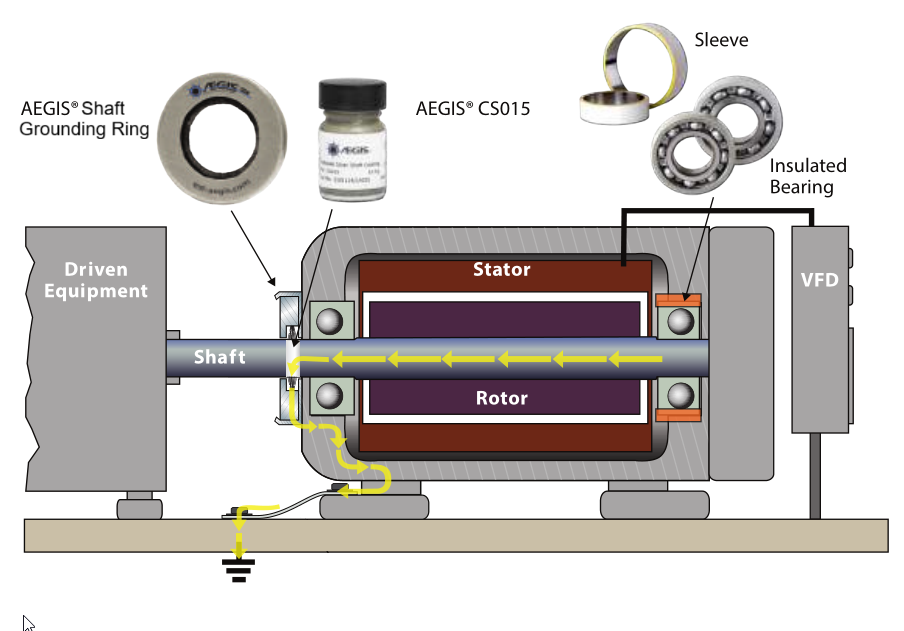
This is where shaft grounding comes into play. Shaft grounding devices, like our AEGIS® Shaft Grounding Rings, create a conductive path from the motor shaft to the motor frame. These rings feature conductive microfibers that contact the motor shaft, bleeding off shaft voltage before it can build up enough to arc through the bearings.
Electrical bearing protection for larger motors, over 100 HP (75 kW), requires more than just shaft grounding. Larger motors are at risk of high frequency circulating current (HFCC), along with shaft voltage discharge. We recommend installing an insulated bearing on the non-drive end of large motors, in conjunction with a shaft grounding device on the drive end. For more information on best practices and installation, see our AEGIS® Bearing Protection Handbook.
AEGIS® Shaft Grounding Rings are a critical component for preventing premature motor failure and ensuring long-term reliability in VFD-powered systems.
Building a Comprehensive Motor Reliability Program
A robust reliability program moves beyond reactive repairs and adopts a proactive, evidence-based mindset. It combines best practices in mechanical and electrical maintenance, risk-mitigating measures, and continuous monitoring to ensure critical systems stay online.
Integrating Proactive Maintenance and Condition Monitoring
A proactive maintenance strategy is about using data to anticipate failures before they happen. This allows maintenance to be scheduled on your terms, rather than in reaction to a catastrophic failure. Condition monitoring is the cornerstone of any effective predictive maintenance (PdM) program, which has been shown to reduce unexpected stoppages by roughly 45%.
Key monitoring aspects include:
- Vibration Analysis: Identifies issues like misalignment, imbalance, and bearing wear at their earliest stages.
- Temperature Monitoring: Infrared thermography is invaluable for detecting hotspots in motor enclosures, windings, and connections before severe damage occurs.
- Electrical Testing: Regular tests are critical for assessing the health of motor windings, connections, and even bearings. Examples include:
- Insulation Resistance Testing: Measures insulation integrity. Recommended every three to eight months, depending on the environment.
- Phase Resistance Balance Testing: A difference of more than 5% indicates potential winding issues.
- Terminal and Connection Inspections: Quarterly torque checks can reduce contact resistance and prevent arc faults.
- Current Signature Analysis: Can detect rotor bar and bearing problems early.
- Shaft Voltage Testing: To assess the risk of electrical bearing damage.
Accurate and consistent record-keeping is the backbone of a successful PdM program. Detailed maintenance records provide a context, allowing you to track trends, identify recurring issues, and optimize maintenance schedules.
Creating a Culture of Reliability
True reliability is a team effort. It requires moving beyond a reactive “fix-it-when-it-breaks” mentality to a proactive “prevent-it-from-breaking” approach. This involves establishing standardized procedures, investing in training, and performing root cause failure analysis (RCFA). When a system fails, the goal is to understand why it failed to prevent recurrence.
This analysis also informs repair-or-replace decisions. For small motors, replacement is usually cheaper. For larger units, motor repair is more economical.
Neglecting motor maintenance leads to increased unplanned downtime, higher repair costs, and reduced operational efficiency. By contrast, a proactive, reliability-centered approach helps avoid these pitfalls.
Here’s a quick checklist for fostering a culture of reliability:
- Standardize Procedures: Document and enforce consistent maintenance protocols.
- Invest in Training: Equip your team with the skills for modern motor maintenance.
- Practice RCFA: Always investigate why a failure occurred.
- Use Technology: Make the most of condition monitoring and diagnostic tools.
- Maintain Records: Track all maintenance activities and motor health data.
- Communicate: Foster open communication between Maintenance, Operations, and Management.
The Final Layer of Protection for VFD-Driven Systems
For modern systems using VFDs, a complete reliability strategy must include a plan for electrical bearing protection. The energy savings and precise control offered by VFDs are undeniable, but the risk of electrical bearing damage is a constant concern that can lead to costly unplanned downtime. Our role is to reduce that risk.
As a leader in our field, Electro Static Technology provides proven solutions to mitigate this risk. Our AEGIS® Shaft Grounding Rings are specifically designed to provide a low-resistance path from the motor shaft to the motor frame, safely dissipating shaft voltage before it can discharge through the bearings and damage them.
AEGIS® Shaft Grounding Rings serve as one layer of protection within a broader reliability strategy, helping prevent this specific failure mode and improving overall system reliability.
We stand by the quality and effectiveness of our products, offering a 2-Year Extended Warranty for added peace of mind. To learn more about how our technology safeguards your critical equipment, we invite you to learn more about AEGIS® Shaft Grounding Ring technology.
AEGIS Rings also come with a 2-year extended warranty against bearing fluting damage. No other form of protection against VFD-caused bearing damage offers a warranty like this.
To learn more about AEGIS shaft grounding and best practices for electrical bearing protection – for motors and generators – sign up for a training. We offer monthly live training webinars, and we can also visit your facility to review your exact application.
Improving Wind Generator Reliability with Shaft Grounding
Electric generators are essentially motors in reverse: rather than drawing power from the line and using it to do work, they are driven by an external force, such as wind, which is used to produce electric power. Unfortunately, wind and other generators are, also like motors, vulnerable to electrical damage caused by inverters. This causes premature failure and the huge expense of unplanned downtime.
Inverters and Stray Current
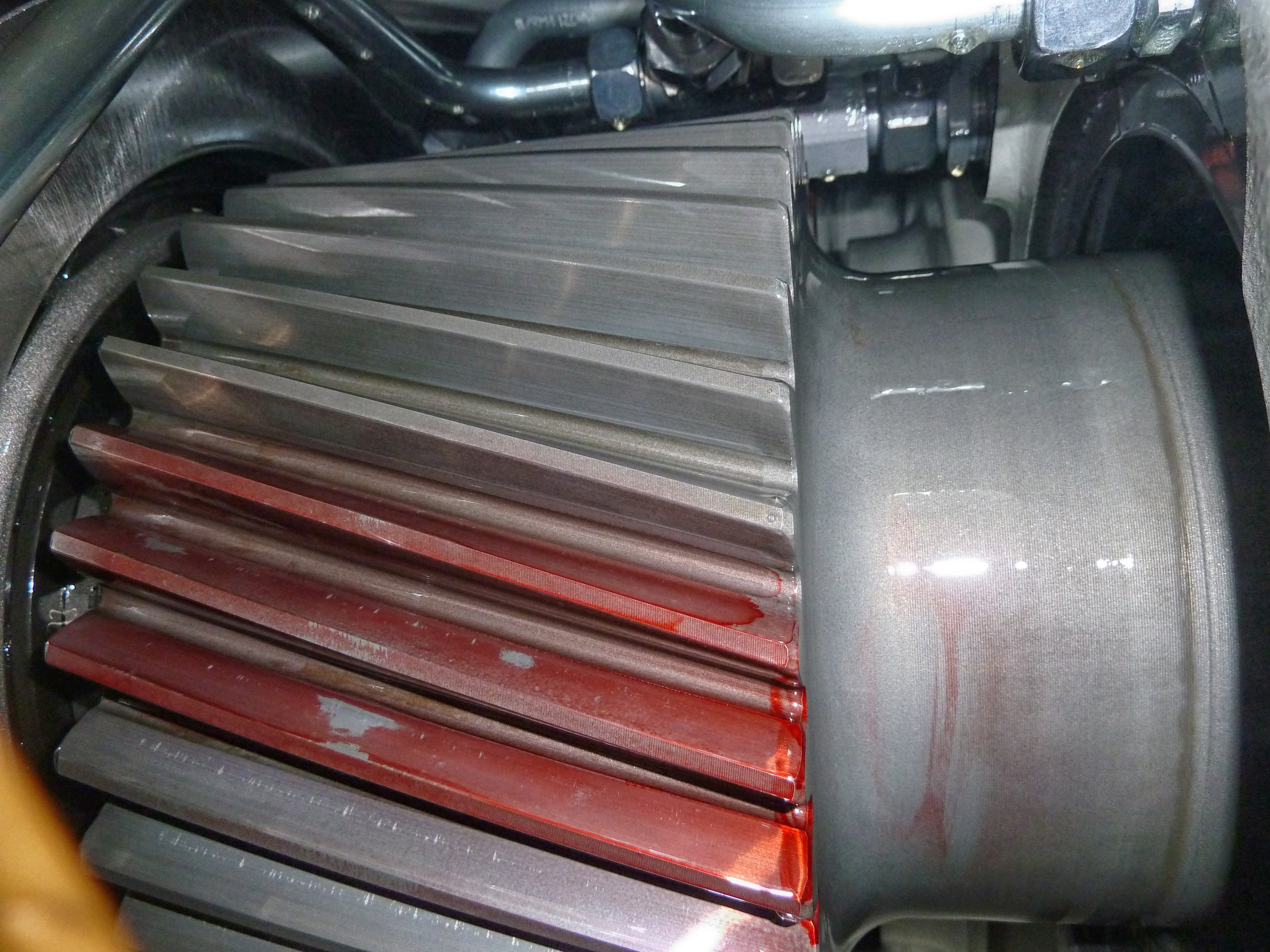
The most common types of WTGs are doubly-fed induction generators (DFIGs) and permanent magnet synchronous generators (PMSGs). Both use inverters to regulate their power output, and DFIGs additionally use an inverter for excitation. Unlike PMSGs, DFIGs also use gearboxes.
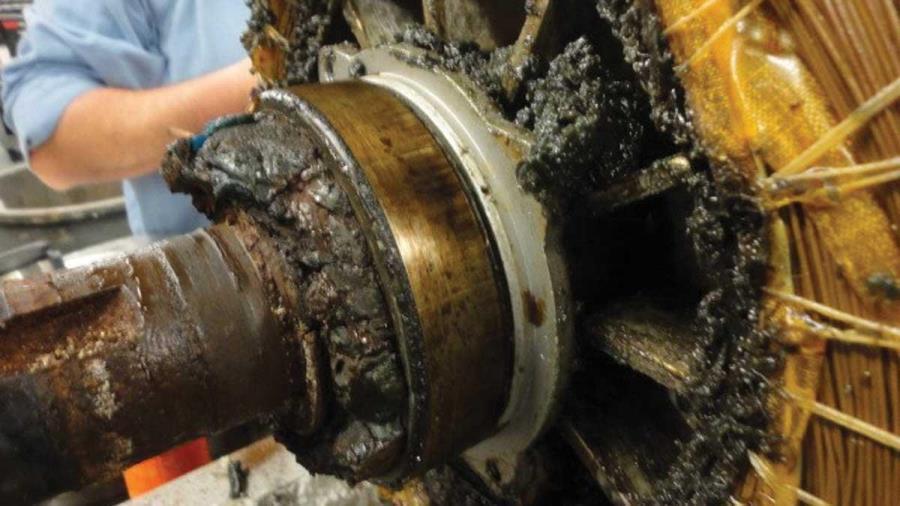
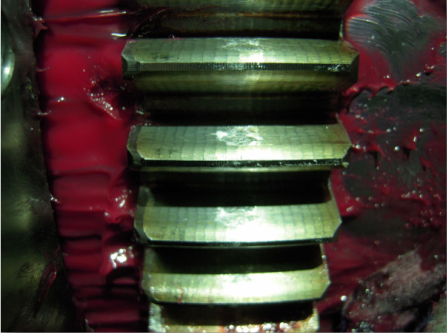
The problem with inverters is that their high switching frequencies and unbalanced phase voltages produce stray voltage and current in their systems. In WTGs, this can lead to electrical damage to the generator’s bearings and gearboxes. This damage accumulates and can cause premature system failure. The image shows “tiger striping” on a gearbox, which was caused by electrical damage.
In addition to inverter-induced electrical damage, wind turbines are prone to large static charges that can damage bearings and gearboxes. This problem is most severe in doubly-fed systems, but it also occurs in PMSGs.
Protection from Electrical Damage

Many WTGs include one or more insulated or hybrid bearings, which are resistant or immune (respectively) to electrical damage. They are particularly effective at blocking high-frequency circulating currents. Two insulated bearings are not a complete solution for DFIGs because there will still be stray voltage on the shaft, which, with the bearings blocked, will tend to discharge through the gearbox instead.
Most WTGs also include a carbon brush to ground the shaft. These brushes can carry high-amperage DC and low-frequency current, but they have higher impedance at high frequencies. Since the stray current produced by inverters is largely high-frequency, they are less than a perfect match.
The AEGIS® PRO Series Shaft Grounding Ring was developed specifically to address high-frequency stray current in large motors and generators. AEGIS PRO Rings ground the shaft by surrounding it with millions of conductive microfibers that bleed off voltage before it builds up high enough to discharge by arcing through a bearing or gearbox.
An installed AEGIS PRO is shown in the second photo – the AEGIS ring is the outermost metallic circle. The conductive microfibers (black) are visible around the inner diameter of the ring.
The best practice for electrical bearing protection is to combine these three approaches: One hybrid bearing to interrupt circulating current, a carbon brush or brushes to carry DC and low-frequency current, and an AEGIS PRO Ring to dissipate inverter-sourced high-frequency voltage.
With this combination, generations and gearboxes are essentially totally protected against electrical damage to rotating equipment. This electrical protection is, of course, only one component of reliability, but it is one less thing for wind farm managers to worry about.
AEGIS Rings also come with a 2-year extended warranty against bearing fluting damage. No other form of protection against VFD-caused bearing damage offers a warranty like this.
To learn more about AEGIS shaft grounding and best practices for electrical bearing protection – for motors and generators – sign up for a training. We offer monthly live training webinars, and we can also visit your facility to review your exact application.
Case Study: Mining Reliability & AEGIS Shaft Grounding
Electric motors are essential to modern mining. From conveyors and crushers to electric trucks and loaders, to pumps and the HVAC equipment that keeps the air breathable, all are run by motors. When a motor fails, production will be slowed or even shut down until it is repaired or replaced. So obviously, preventing motor failure is a good thing.
Electric motors are nowadays often controlled by variable-frequency drives for several reasons. But despite their advantages, drives have their drawbacks, too. They can cause premature motor failure by damaging both the motor windings and the motor bearings. Nowadays, most motors sold for use with VFDs are resistant to winding damage, but protection against electrical bearing damage from drives is still the exception, not the rule.
Case in point: A dredge mine in western Africa had been suffering repeated bearing failures on its 2 MW cutter motor. The bearings showed fluting damage (above), which is the hallmark of electrical bearing damage from VFD control.
This damage is caused by stray voltage produced by the drive on the motor shaft. A common solution to this problem is to ground the shaft to dissipate the stray voltage. So the mine installed carbon shaft grounding brushes… but the failures continued. They also found that the grounding brushes required frequent maintenance to keep the springs from jamming in the sandy environment.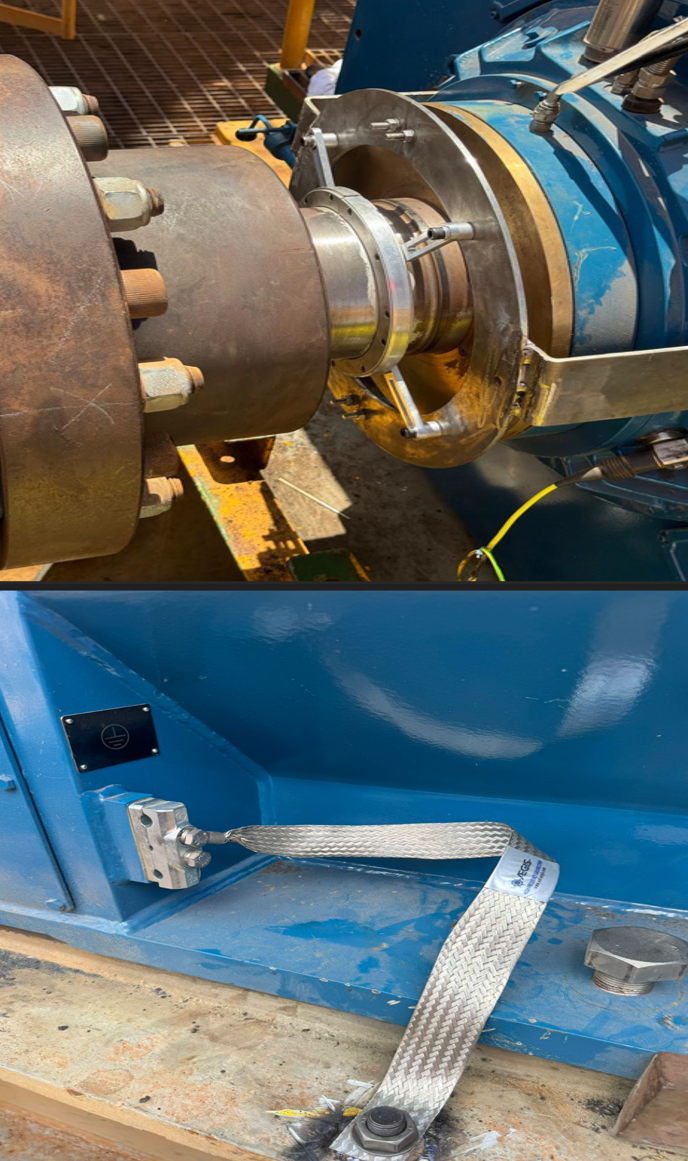
Then they heard about the AEGIS® Shaft Grounding Ring. Rather than pressing a conductive block against the shaft, the AEGIS ring surrounds the motor shaft with hundreds of thousands, up to millions, of conductive microfibers. AEGIS microfibers were specifically chosen to bleed off stray voltage from VFD control because, unlike carbon brushes, they have a very high surface area per unit volume. This high surface area exploits the skin effect to provide low impedance to high-frequency current, such as the stray current produced by drives.
So in early 2025, the mine installed an AEGIS PRO Series ring on the cutter motor, as well as an AEGIS HFGS, a braided grounding strap that helps ensure stray current a path to ground.
A year later, the mine stakeholders remain happy with the AEGIS system’s performance… So much so that they are installing additional PRO rings and grounding straps on other equipment.
The AEGIS PRO Series was designed to dissipate shaft voltage in large- and medium-voltage motors. For smaller motors, the AEGIS SGR provides excellent shaft grounding. Motors over 100 HP/75 kW are also susceptible to high-frequency circulating current, for which we recommend insulating one bearing or using a hybrid ceramic bearing at the opposite end of the motor from the AEGIS ring.
In hazardous locations, AEGIS rings may be installed inside explosion-proof (XP) and Ex d motors. If the manufacturer or another expert confirms that it would be safe, AEGIS can also be installed on Class I, Division 2, and Ex ec motors. For hazardous duty motor lines with AEGIS installed or optional, see this Application Note.
AEGIS rings are also the only electrical bearing protection to offer a two-year extended warranty against electrical bearing damage. The warranty applies to new and repaired motors, as well as to motors with AEGIS factory-installed.
To learn more about AEGIS shaft grounding and best practices for electrical bearing protection, sign up for a training. We offer monthly live training webinars, and – pandemic restrictions permitting – we can also visit your facility to review your exact application.
Industrial Motor Maintenance Challenges: Addressing Common Causes of Unplanned Downtime
(Industrial Motor Maintenance Challenges — Series Kickoff)
Key Takeaways
For most facilities, unplanned downtime—not motor failure itself—is the real operational and financial risk.
Motor issues often share a small set of root causes: electrical bearing damage, misalignment, imbalance, lubrication errors, and contamination.
VFD-driven motors introduce a specific reliability threat: shaft voltage that can discharge through bearings.
AEGIS® Shaft Grounding Rings help reduce the risk of premature failure due to electrical bearing damage—but they are one part of a broader maintenance strategy.
A proactive program combining electrical, mechanical, and operational best practices delivers the highest system reliability.
The Real Risk: Unplanned Downtime, Not Motor Failure
In industrial environments, motors are the backbone of production—running conveyors, pumps, HVAC systems, mixers, compressors, and more. When a motor fails unexpectedly, the direct repair cost is only a fraction of the impact.
The real pain point is unplanned downtime:
Lost production output
Missed delivery schedules
Idle labor
Safety risks from emergency repairs
Stress on backup systems
Whether in manufacturing, food processing, pharmaceuticals, or building systems like hospital HVAC, operators aren’t simply trying to avoid a motor failure—they’re trying to keep their systems running continuously and predictably.
That’s why understanding the most common maintenance challenges is essential to preventing unexpected outages.
Common Motor Maintenance Challenges That Lead to Downtime
Most motor failures can be traced back to a handful of mechanical and electrical root causes. A strong reliability strategy addresses each of these proactively.
1. Electrical Bearing Damage
Variable Frequency Drives (VFDs) offer process control benefits, but they also generate high-frequency shaft voltage. If that voltage does not have a safe path to ground, it can discharge through the bearings, causing:
Pitting
Fluting
Excess vibration
Shortened bearing life
This is one of the leading causes of premature bearing failure in modern industrial systems.
How AEGIS® Helps:
AEGIS® Shaft Grounding Rings provide a 360° path of conductive microfibers that safely bleed shaft voltage to ground—reducing the risk of electrical bearing damage and helping maintain system uptime.
2. Misalignment
Improper alignment between the motor and the driven equipment increases load on bearings and couplings.
Symptoms include:
Elevated vibration levels
Excess heat
Premature bearing wear- Premature seal and coupling failure
Laser alignment tools and scheduled checks are essential components of a healthy maintenance program.
3. Imbalance
Rotor or coupling imbalance produces excessive vibration that stresses bearings and shortens the life of mechanical components. Balancing procedures and vibration trend monitoring help detect imbalance early—before it turns into a shutdown.
4. Lubrication Errors
Lubrication is one of the most common failure points in industry.
Failures often stem from:
Over-lubrication
Under-lubrication
Incorrect grease type
Contamination during lubrication
Proper schedules, clean practices, and correct material selection are critical.
5. Contamination
Dirt, moisture, chemicals, and airborne particles can enter motors and deteriorate bearings quickly.
Best practices include:
Sealed enclosures in harsh environments
Regular filter and seal inspections
Clean installation conditions
Where VFD-Related Bearing Damage Fits in the Bigger Picture
Electrical bearing damage isn’t the only maintenance challenge—but it has become more common as VFD adoption grows.
VFDs introduce:
Capacitive shaft voltage (in all motor sizes)
High-frequency circulating current (especially in larger motors)
If left unmanaged, these electrical effects can significantly increase the risk of premature failure and unplanned downtime.
AEGIS® Shaft Grounding Rings address this specific failure mode by providing a safe, low-impedance path for shaft voltage to ground.
They don’t fix misalignment, contamination, or lubrication problems—but they eliminate one major electrical threat so that your other maintenance strategies can be more effective.
A Holistic Approach to Motor Reliability
Motor reliability improves dramatically when plants combine electrical and mechanical best practices:
Follow motor and VFD manufacturer installation guidelines
Use vibration monitoring and trend analysis
Keep alignment within recommended tolerances
Maintain lubrication schedules
Protect against electrical bearing damage with AEGIS® grounding solutions
Conduct regular shaft voltage testing
Train maintenance teams on proper installation and inspection procedures
Electro Static Technology also offers technical resources, on-site programs, and live monthly training webinars to help facilities build stronger maintenance programs.
FAQs
Q: Are AEGIS® Shaft Grounding Rings a complete solution to motor failure?
No. They reduce the risk of premature failure due to electrical bearing damage, but other mechanical issues also require attention.
Q: Do all VFD-driven motors need a grounding ring?
Yes. Any motor controlled by a VFD is at risk of shaft voltage discharge.
Q: What about motors over 100 HP?
Best practice is to isolate one bearing and install an AEGIS® ring on the opposite end to address circulating currents.
Q: Can AEGIS® rings be retrofitted to motors already in service?
Yes. Split rings, clamp-on mounts, epoxy kits, and uKIT universal brackets make retrofits straightforward.
Protect Your Systems Before Failure Happens
No single tool prevents every motor failure—but understanding the causes and mitigating each risk is the key to keeping systems online.
AEGIS® Shaft Grounding Rings help reduce one of the most common electrical causes of premature motor failure, supporting the uptime and reliability your operations depend on.
Learn how AEGIS® bearing protection can help you reduce one key cause of motor failure and keep your systems running reliably.
AEGIS Rings come with a 2-year extended warranty against bearing fluting damage. No other form of protection against VFD-caused bearing damage offers a warranty like this.
To learn more about AEGIS shaft grounding and best practices for electrical bearing protection, sign up for a training. We offer monthly live training webinars, and we can also visit your facility to review your exact application.
Why Not Use Two AEGIS Rings to Protect Against Circulating Current?
For large motors on drives (over 100 HP/75kW), we recommend an AEGIS® Shaft Grounding Ring at one end of the motor, and an insulated or hybrid/ceramic bearing at the opposite end. People often ask us, “Why not use two AEGIS rings, one at each end?”
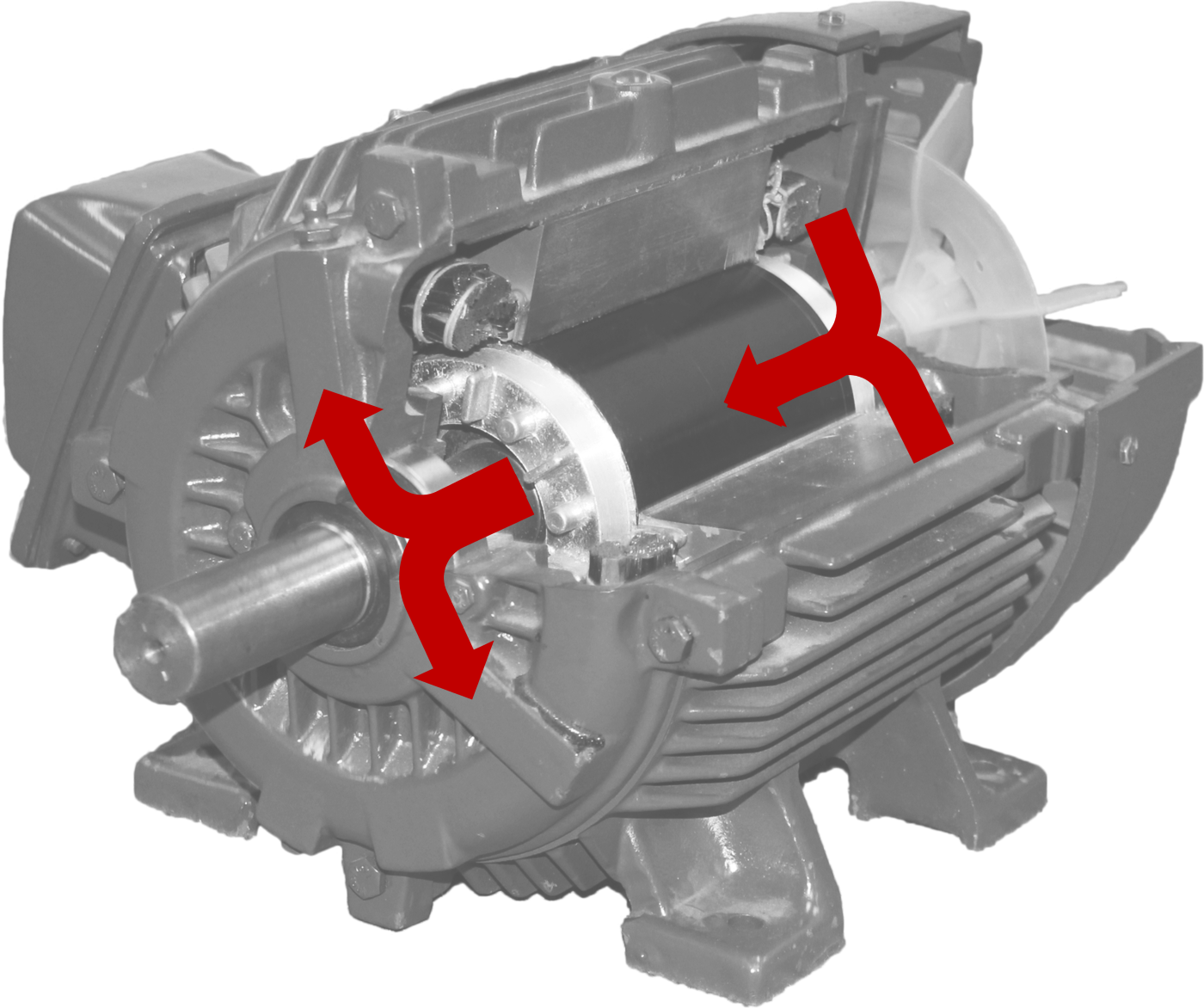
Two Different Bearing Currents
When motors on drives are well-grounded/bonded back to the drive, the two bearing currents you need to worry about are 1) shaft voltage discharge/EDM current, which occurs in all motors on drives, and 2) high-frequency (HF) circulating current, which is mainly a problem in motors over 100 HP/75 kW.
Shaft voltage discharge usually comprises a single arc through the bearing. It’s fast – under 0.1 microseconds (one ten-millionth) – but fairly small, ranging from 0.5 to 3 amps peak. HF circulating current goes on for longer – instead of one pulse, you get current cycling back and forth (a decaying sine wave, for the electrical engineers) – and is larger, with peak values up to 20 amps.
Lessons from History
In the early days of AEGIS rings (~2007), we recommended two rings, one at each end of the motor, to divert circulating current around the bearings. At first glance, this is a good idea – if an AEGIS ring can bleed off shaft voltage by carrying current around the bearing, then one at each end should protect both bearings. In reality, this is not always a good idea.
In some installations with very high circulating current, the combination of high amplitude and long duration can be enough to electrically wear AEGIS rings. In these problem cases, the grounding rings work for a few months or years, and then stop functioning. Electrical bearing damage then quickly sets in.
It was a painful lesson, but we learned it quickly. It is difficult to predict whether a motor will have HF circulating current large enough to preclude the two-AEGIS method, so to play it safe, we stopped recommending it at all.
Best Practices for Motors over 100 HP/75 kW
For motors on drives large enough for circulating current to be a risk, we now recommend the following:
- One AEGIS ring (usually at the drive end) to dissipate shaft voltage and prevent EDM. For low voltage motors up to 300-500 HP/225-375 kW, an AEGIS SGR is adequate. Larger and medium voltage motors require an AEGIS PRO Ring.
- One insulated or hybrid bearing at the opposite end from the AEGIS ring to interrupt circulating current
This approach has been verified by thousands of successful installations over the past 20 years. An insulated bearing is usually enough protection, but in some cases a hybrid bearing may be necessary to prevent circulating current from flowing.
In cases where an insulated or hybrid bearing is impractical, common mode chokes may be used. They may or may not eliminate HF circulating current, but they will at least reduce the risk of bearing failure. Common mode chokes, sometimes branded “inductive absorbers,” cannot prevent shaft voltage buildup and discharge, so they should be used in combination with an AEGIS ring for full protection.
Summary
- Shaft voltage discharge creates a risk of premature bearing failure in all motors on drives
- High frequency circulating currents are an additional risk in large motors on drives (over 100 HP/75 kW)
- AEGIS Shaft Grounding Rings protect against bearing damage from shaft voltage discharge
- Shaft voltage discharge comprises very rapid arcs, whereas circulating current arcs back and forth through the bearing in a continuous wave
- Protecting against circulating current with two AEGIS rings, one at each end of the motor, is not recommended
- The best practice is to install an AEGIS ring at one end of large motors, and use an insulated or hybrid bearing at the opposite end
AEGIS Rings come with a 2-year extended warranty against bearing fluting damage. No other form of protection against VFD-caused bearing damage offers a warranty like this.
To learn more about AEGIS shaft grounding and best practices for electrical bearing protection, sign up for a training. We offer monthly live training webinars, and we can also visit your facility to review your exact application.
Electrified Transportation & Bearing Damage
It’s hard to believe, but the first electric vehicles were created almost 100 years ago. Electric trains were developed in Vermont and Scotland in the 1830s. The first electric autos and boats came in the 1880s, followed by electric submarines and dirigibles.
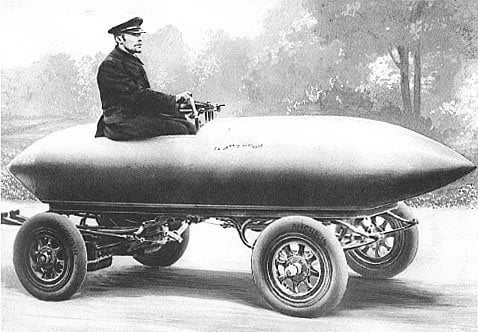 The early 20th century saw the rise of the internal combustion engine, and except for certain rail applications, electrical transportation fell out of fashion for several decades. e-transport’s 21st-century resurgence was made possible by improvements in battery technology and the development of variable frequency drives (a.k.a. VFDs, inverters, converters, or simply ‘drives’).
Drives: A Boon to Electric Transport
VFDs convert DC power – supplied by a battery or a DC bus fed by an AC source – to AC at a wide range of frequencies. This is immensely useful in vehicles because it allows for easily-controlled, smooth, gradual acceleration. They are also more efficient than the all-DC forms of control used in 19th-century electric vehicles. Efficiency is paramount in battery-powered transport, since it can mean the difference between reaching your destination and being stranded.
The Drawbacks of Drives
Modern drives produce AC power by releasing a rapid series of positive or negative voltage pulses. Unfortunately, these rapid-fire pulses have damaging effects on the motors and systems they control. Among others, they produce stray currents in the motors they control, and without protection, this current can arc destructively through the motor bearings, gearbox, or other driven equipment. The resulting electrical damage can lead to premature bearing or gearbox failure.
Stray Current Mitigation
Fortunately, the risk of premature failure can be mitigated. AEGIS® Shaft Grounding Rings provide a “path of least resistance” to stray current, so rather than arcing through the bearings, gearbox, or other equipment, the current flows harmlessly through the AEGIS ring. AEGIS shaft grounding has been used extensively in both industry and transport to protect from the damaging effects of drives.
For just a few examples:

Electric Cars & Trucks
When most people hear “electric vehicle,” they think of cars and trucks. Automotive manufacturers, both in the US and abroad, use AEGIS rings to protect their vehicles’ motor bearings from stray current produced by inverter drive operation, and we are in talks with many more. For more information, see our white paper on the topic.
Rail
Electric trains, trams, and trolleys are an interesting case because they don’t typically have batteries. Rather, they draw their power from a third rail. Regardless, they still use drives to control their electric motors, and thus have problems with electrical bearing damage. In this blog post, we go more into the specific aspects of shaft grounding in rail applications.
Marine
While e-cars typically have large batteries and trains draw line power through the third rail, ships tend to have their own generators. Some yachts may have wind turbines or solar arrays, but commercial ships usually have diesel generators to power their motors and other electrical systems. This case study tells how one ship suffered repeated failure due to “tiger-striping” electrical damage, caused by stray current from the generator shaft. The ship’s owner eventually solved the problem with an AEGIS PRO Series ring in the problem ship – and also preemptively installed PRO Rings in their other ships as well.
Aviation
Although AEGIS Rings have been to space, as components in satellites and rovers, they have not yet been installed in commercial aircraft. But electric planes are subject to the same stray voltage as any other electric vehicle using drives in some capacity, and they, too, will have a problem with electrical bearing damage.
Summary
- Variable frequency drives are a critical component in 21st century electric vehicles
- Drives can cause electrical damage to motor bearings and other components
- AEGIS Shaft Grounding Rings divert drive-induced stray current around the bearings, by providing a path of lower resistance
AEGIS Rings also come with a 2-year extended warranty against bearing fluting damage. No other form of protection against VFD-caused bearing damage offers a warranty like this.
To learn more about AEGIS shaft grounding and best practices for electrical bearing protection, sign up for a training. We offer monthly live training webinars, and we can also visit your facility to review your exact application.
Distribution Center Automation & Electrical Bearing Damage
Distribution centers are a seldom-seen but hugely important component of the modern economy. These invisible titans, along with data centers, make mass e-commerce possible, and arguably play as big a role as Santa Claus in getting presents under the tree. (Hint-hint.)
Distribution Center Automation: The State of the Industry
Industrial automation saves both time and money, but most distribution centers are still labor-intensive. As of 2024, only 20% of had implemented any automation. As machine learning and robotics progress, that fraction is sure to increase.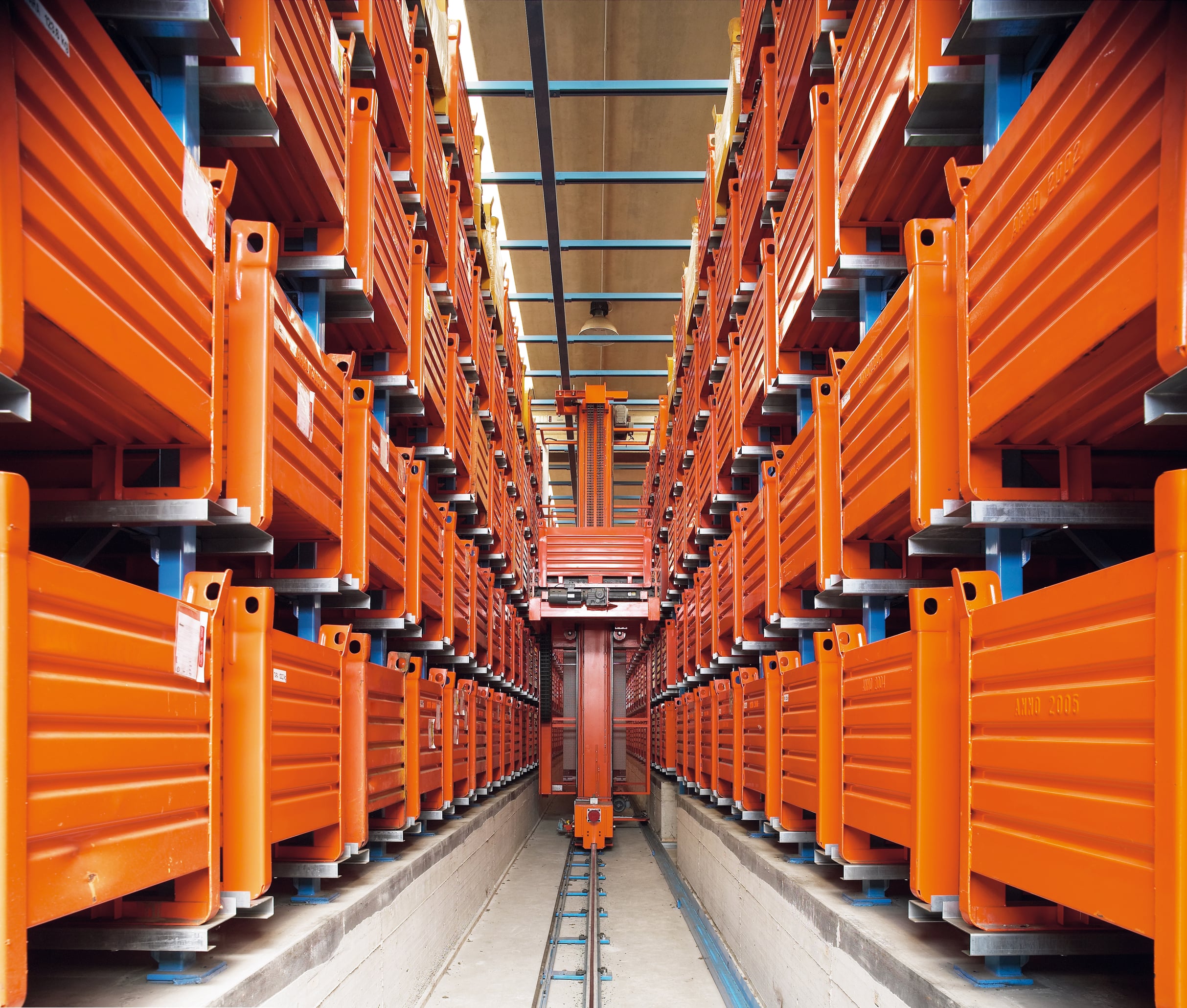
Automation, VFDs, & Electrical Bearing Damage
Controlling motors with variable frequency drives (VFDs) is a large part of automation, from conveyors to robotics. These drives allow the precise control of motor speed required for coordinated motion. Unfortunately, without protective measures, drives also cause electrical damage to motor bearings, leading to premature failure. Along with repair or replacement costs, this can even cause unplanned downtime and the huge expense of lost productivity. So if not well-implemented, automation can cancel out its promised savings.
Protect Uptime by Protecting Motor Bearings
To realize the savings promised by automation, electric motors must be protected from electrical bearing damage. One easy means of protection is to ground the shaft with an AEGIS® Shaft Grounding Ring. An AEGIS ring provides a low-resistance path between the motor shaft and frame, so any stray current flows through the ring preferentially to the bearings. The bearings are thus protected from electrical damage, and operations are protected against unplanned downtime.

In many cases, facilities/maintenance workers can retrofit AEGIS rings to installed motors. In more complex machines, distribution center personnel may not be able to get to the motors within. In this case, they would need to request that the machine manufacturers use motors with AEGIS rings factory-installed.
Summary
- Automation levels in distribution centers are low but rising
- VFDs are useful in automation because of how precisely they can control motors
- VFDs cause electrical bearing damage and premature failure in unprotected motors
- AEGIS Shaft Grounding Rings protect motors from electrical bearing damage, and so protect distribution centers from unplanned downtime.
AEGIS Rings come with a 2-year extended warranty against bearing fluting damage. No other form of protection against VFD-caused bearing damage offers a warranty like this.
To learn more about AEGIS shaft grounding and best practices for electrical bearing protection, sign up for a training. We offer monthly live training webinars, and we can also visit your facility to review your exact application.
Electrical Bearing Protection for Motors in Hazardous Locations
All electric motors controlled by variable frequency drives are at risk of electrical bearing damage. Motors in hazardous locations have the added problem that protective measures, like shaft grounding, are restricted. But for the past 10 years or so, this has been changing.
In Class I Divisions 1/2, and Zones 1/2, potentially explosive gases may be present. The risk of ignition must be kept as low as possible. Shaft grounding devices are considered sparking devices, and so are tightly restricted.
Much of what follows focuses on motor manufacturers, because they are better able to navigate the process of testing motors with shaft grounding for compliance. Buying motors for hazardous locations with AEGIS® Shaft Grounding Rings already installed is the easiest way for users to ensure their motors have electrical bearing protection.
Shaft Grounding in Class I Division 1/Zone 1 Areas
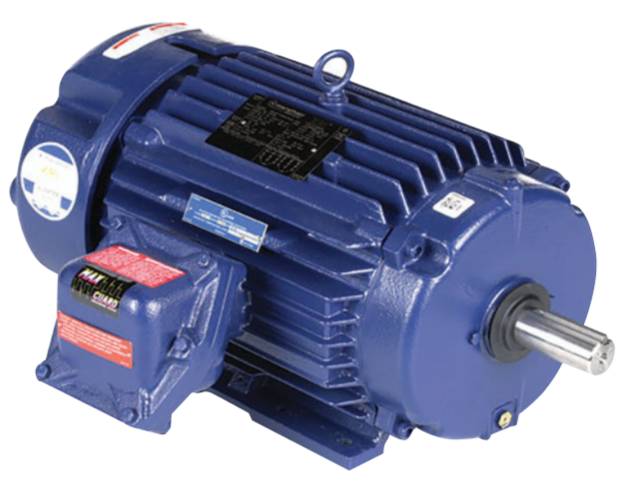
In Class I Division 1 and Zone 1 locations, combustible gases are often present during normal operation. Because of the high risk of ignition, explosion proof (XP) or Ex d motors must be used in these areas. As early as 2014, procedures were developed for installing AEGIS rings inside XP or Ex d motors, outside of the flame path.
Marathon Blue Chip® Hazardous Duty® motors with part number suffix -P include AEGIS bearing current protection standard. Other brands offer AEGIS as an option, including WEG Electric’s WX22db and Explosion Proof motors.
Shaft Grounding in Class I Division 2/Zone 2 Areas
In Class I Division 2/Zone 2, explosive gases are not typically present. IEEE-841 Standard motors are often used in these locations. Shaft grounding can be used in these areas, if it is shown to be safe by a set of non-incendivity calculations. But who should perform this verification?
The formulas involved use properties of the motor and its components that a motor user would have a hard time finding. It would typically be easier for the motor manufacturer to verify non-incendivity than for a user.
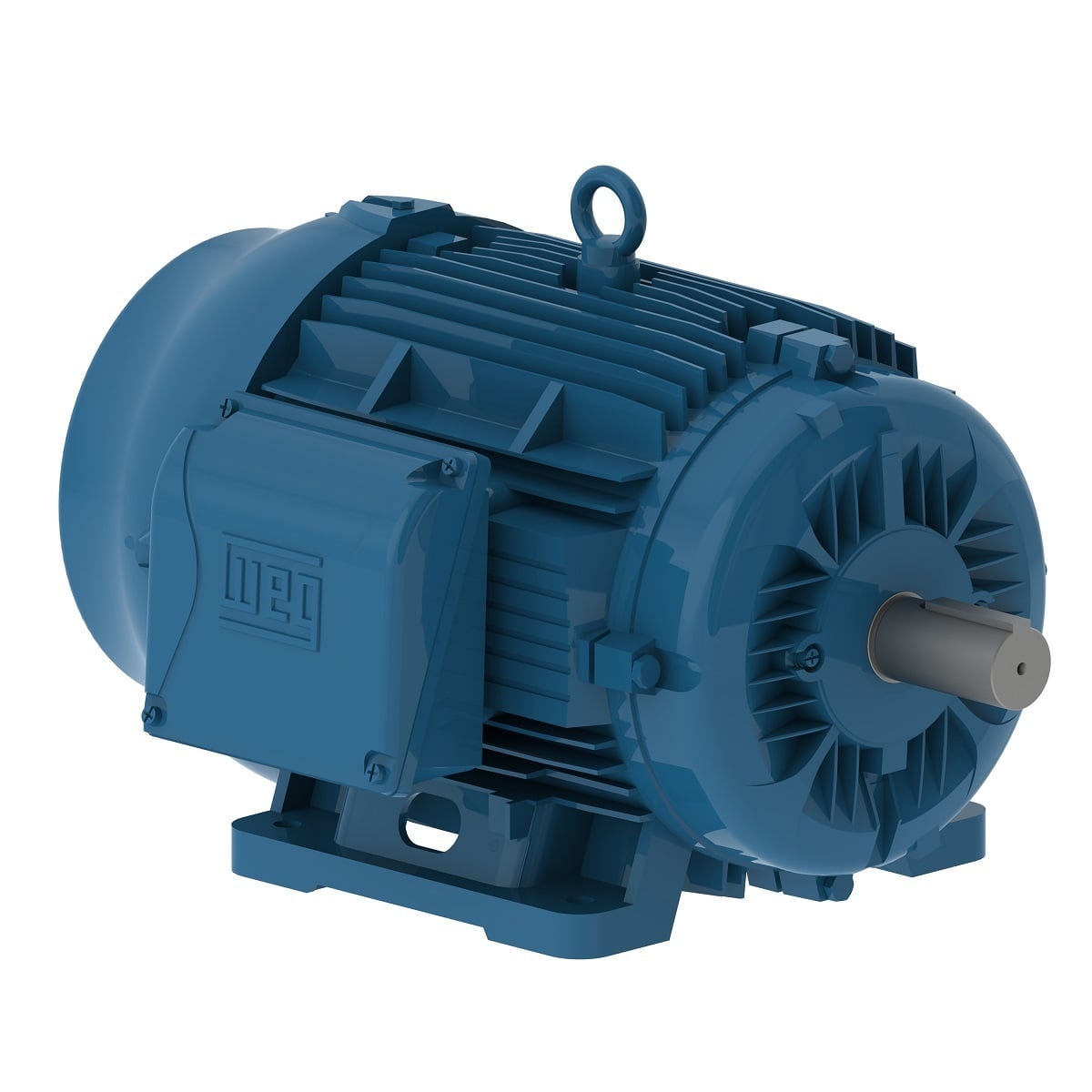
As of October 2025, WEG and Wolong have gone through this process. WEG’s W22 Cast Iron motors can have AEGIS rings factory-installed and be CSA-certified for use in Class I Div. 2 areas. Wolong’s GE Industrial Motors low voltage ULTRA and QUANTUM lines can be CSA-certified Ex ec with AEGIS for use in Zone 2.
Summary
- The best way to use shaft grounding in classified areas is to buy a suitable motor with AEGIS Shaft Grounding Rings factory-installed
For Class I Division 1 and Zone 1 areas:
- Marathon Blue Chip Hazardous Duty motors with part numbers ending -P include AEGIS standard
- AEGIS can be factory-installed as a mod in other Marathon XP motors, and in WEG XP and Ex d motors
For Class I Division 2 and Zone 2 locations:
- WEG W22 Cast Iron motors can be certified for these areas with AEGIS installed
- Wolong’s low voltage GE ULTRA and QUANTUM with AEGIS can be certified Ex ec
AEGIS Rings come with a 2-year extended warranty against bearing fluting damage. No other form of protection against VFD-caused bearing damage offers a warranty like this.
To learn more about AEGIS shaft grounding and best practices for electrical bearing protection, sign up for a training. We offer monthly live training webinars, and we can also visit your facility to review your exact application.
Why Do Motors Experience Electrical Bearing Damage with VFDs?
In today’s manufacturing environment, Variable Frequency Drives (VFDs) are standard tools for controlling motor speed and saving energy—but they introduce a hidden reliability risk. High-frequency shaft voltages generated by VFDs can discharge through motor bearings, causing pitting, fluting and premature failure. The real pain point for operators is unplanned downtime, not just broken bearings. That’s where AEGIS® Shaft Grounding Rings come in. They provide a safe path for shaft voltage to ground, helping protect bearings and keep your system running. For larger motors (over 100 HP), best practice is to isolate one bearing and install the grounding ring on the opposite end for complete protection.
Key Takeaways
- Premature failure of critical motors causes the huge expense of unplanned downtime.
- Variable Frequency Drives (VFDs) can enhance motor control and save energy, but they also create damaging shaft voltage.
- Shaft voltage discharges through bearings, causing pitting, fluting, and premature failure.
- AEGIS® Shaft Grounding Rings give the voltage a safe path to ground, protecting bearings and uptime.
- For motors over 100 HP, isolate one bearing and install a grounding ring on the opposite end for complete electrical bearing protection.
VFDs and Electrical Bearing Damage
 Variable Frequency Drives (VFDs) are widely used to control motor speed and reduce energy costs. However, VFDs produce a high-frequency common-mode voltage. This voltage couples onto the motor shaft, producing a capacitive shaft voltage.
If there is no lower-impedance discharge path, the shaft voltage may arc through the bearings. This arcing creates tiny pits on the bearing raceways. Over time, these pits roughen the raceways, increasing friction, heating, and vibration, and ultimately causing early bearing failure.
In larger motors, VFDs also produce a high-frequency circulating current that causes the same kind of electrical bearing damage.
How AEGIS Shaft Grounding Protects Bearings
An AEGIS Shaft Grounding Ring surrounds the motor shaft with 360° of conductive microfibers. These microfibers continuously bleed off shaft voltage before it can discharge through the bearings.
Because the fibers touch lightly with virtually no friction, wear is negligible and they typically require little to no maintenance once installed. Lab testing suggests a potential wear life of up to 200,000 hours; however, real-world performance is likely to be shorter. Even so, the ring’s life far outlasts the L10 life of the bearing.
Best Practices for VFD-Driven Motors
 Follow manufacturer guidance. Always adhere to the VFD manufacturer’s recommended installation and grounding procedures.
Install an AEGIS Shaft Grounding Ring. Select the correct AEGIS ring for your motor size and a convenient mounting method. Options include solid, split, clamp-on, epoxy-mounted, and universal kits for easy retrofits.
Enhance shaft conductivity. Apply a conductive shaft coating to improve the effectiveness of shaft grounding.
For motors over 100 HP: Use one insulated or ceramic bearing to interrupt circulating current, and install an AEGIS Shaft Grounding Ring on the opposite end to ensure complete protection.
FAQs: VFD Bearing Protection
Q: Do all VFD-driven motors need shaft grounding?
Yes. Any VFD-controlled motor is at risk of shaft voltage discharge. Grounding rings are a preventive measure to avoid bearing damage.
Q: Can I install an insulated bearing and shaft grounding at the same end of the motor?
No. If an AEGIS ring (or other shaft grounding device) is installed at the insulated bearing end, circulating current will pass through the ring and arc through the opposite bearing. Always install shaft grounding opposite the insulated bearing.
Q: Can shaft grounding rings be retrofitted to existing motors?
Yes. Split rings, clamp-on designs, and epoxy kits make it easy to retrofit AEGIS rings onto motors already in service.
Protecting Your Motors Before Failure Happens
Unplanned downtime is not an option for businesses, from data centers to hospitals to paper mills. Installing AEGIS Shaft Grounding Rings is one of the simplest, most cost-effective steps you can take to reduce your risk of unplanned downtime.
Electro Static Technology, an ITW company, proudly manufactures AEGIS Shaft Grounding Rings in Maine, USA. Explore our applications page or request a quote to learn how AEGIS can help keep your motors running reliably.
AEGIS Rings come with a 2-year extended warranty against bearing fluting damage. No other form of protection against VFD-caused bearing damage offers a warranty like this.
To learn more about AEGIS shaft grounding and best practices for electrical bearing protection, sign up for a training. We offer monthly live training webinars, and we can also visit your facility to review your exact application.